
 Steven Prusakowski
Back in 2018, the raw and gripping Daredevil series starring Charlie Cox as Matt Murdock and Vincent D’Onofrio as Wilson Fisk was abruptly canceled by Netflix. Fans were left wondering why. The answer had little to do with viewership or any kind of creative shortcomings. Season 3 of the Netflix era is considered by many to be the best. There was much more going on behind the scenes than it seemed. This was actually something much bigger, a power move in the escalating streaming wars, a strategic reshuffling of pieces on the corporate chessboard as Disney prepared to launch its own platform, Disney+.
Daredevil seemed destined to remain a bittersweet memory, with many wondering if Cox and D’Onofrio would ever return to these roles or if this version of the Hell’s Kitchen vigilante had been lost forever. Many fans worried that if it ever did return it would either be recast or lose its dark edge as Disney was never going to keep it as violent as Netflix had. Nearly a decade later, the duo returned in Daredevil: Born Again, reuniting much of the original cast and recapturing the gritty, dark Marvel tone that fans loved so much.
(Warning: major season one spoiler ahead)
While it was a treat to see Cox and D’Onofrio return as well as Deborah Ann Woll as Karen Page, Elden Henson as Foggy Nelson, Jon Bernthal as Frank Castle the Punisher, and Wilson Bethel as Bullseye all back again, season one suffered from a few pacing bumps and bruises and heartlessly took away a beloved character. By the end of the season, Fisk, who is now mayor, declares martial law, launching the Anti-Vigilante Task Force (AVTF) as part of his “Safer Streets Initiative” which targets masked heroes and anyone who stands in the way, leaving Murdock in hiding and Daredevil constantly on the run.
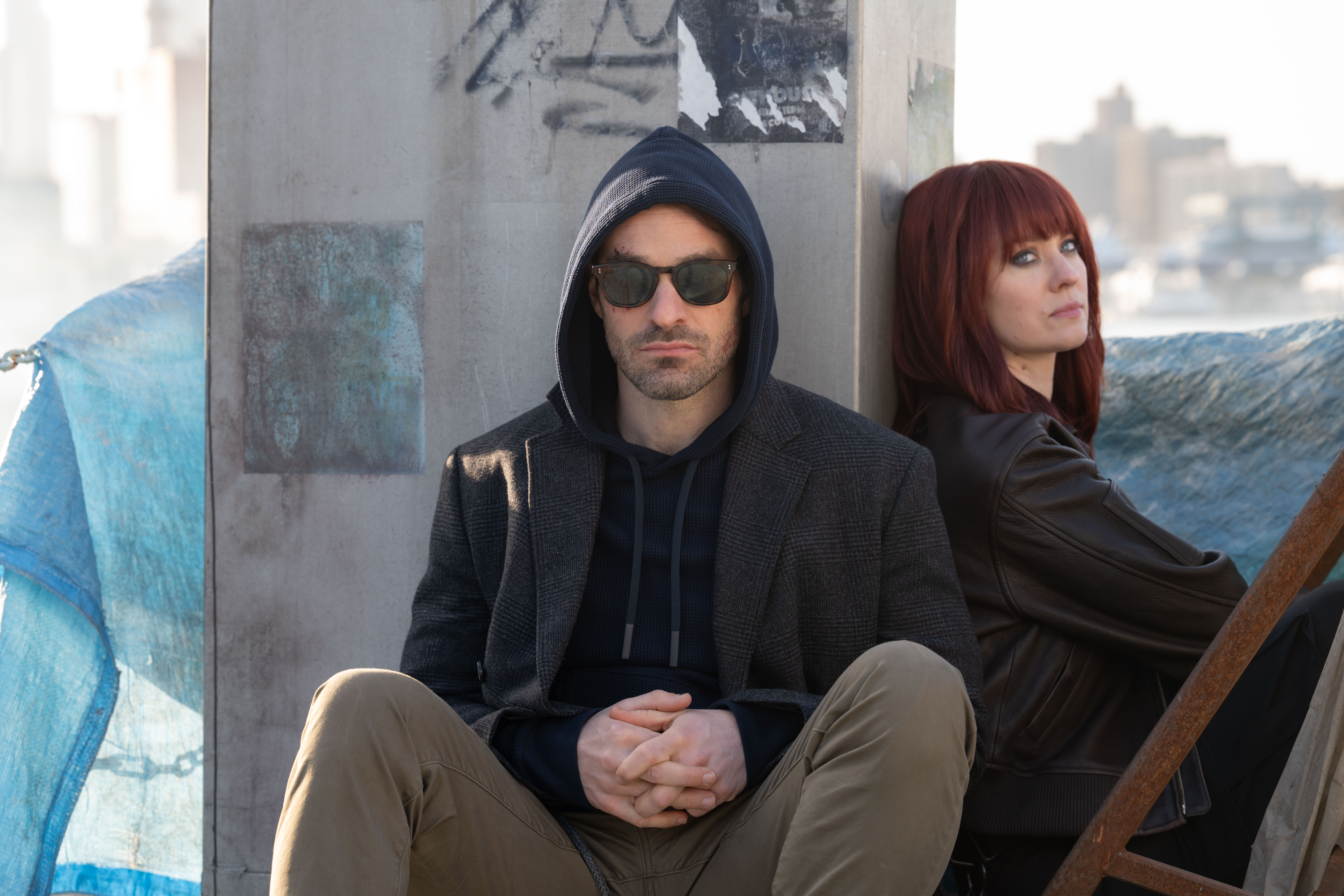
As season two picks up, it plays out like another chess game, with pieces slowly moving into position as both sides pursue their own interests and anticipate their opponents. Things start slowly, with each episode gradually revealing allegiances; some supporting Fisk, some supporting Murdock, and others acting in their own self-interest.
The main drawback of telling a story this big is that Hell’s Kitchen feels overcrowded this season, making it challenging to keep track of everything at times. With so many characters sharing the screen, some compelling ones fight for meaningful time while others receive more focus than needed. It is understandable given the world-building, but in only eight episodes the juggling sometimes hurts focus, the old Netflix 13 episode approach would have helped.
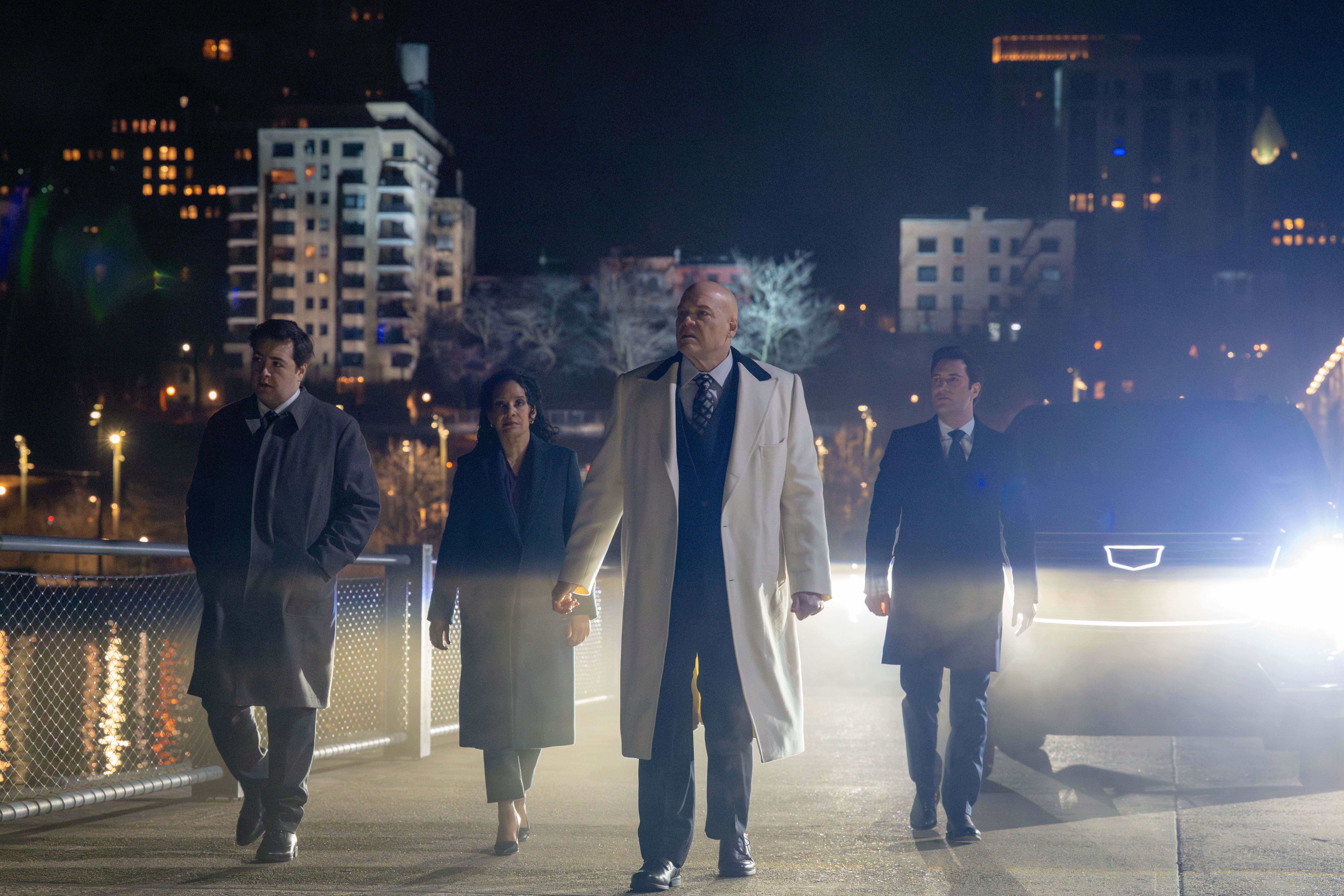
The biggest benefit of the deeper character development and more complex relationships is how they help flesh out the frighteningly relevant socio-political commentary, offering numerous perspectives that capture the tangled facets of today’s climate. While not as pointed as Disney+’s other anti-fascism commentary in Andor, Season 2 dives headfirst and gets its hands dirty with the issues of authoritarian overreach, the dangers of unchecked power dressed up as public safety, and the sacrificing of civil liberties under the guise of “making the streets safer.” There’s no denying the influence of today’s current landscape.
The AVTF storyline draws obvious parallels to real-world clashes around ICE and how militarized law enforcement can be used by the power hungry and turn into sanctioned domestic terrorism of its own. While tackling these broader global themes, the show remains grounded in Hell’s Kitchen and the larger battle for New York’s soul. The writing does not shy away from showing how easily institutions can be weaponized when the wrong people hold the reins.
For those that worry about the series becoming so political it loses its identity, do not worry. There are plenty of action sequences to get the show’s pulse racing and make sure you never forget you are watching Daredevil. Some standouts that will delight even the most fickle fans include choreography that is incredibly kinetic, tighter, and shot in a way that allows you to follow it rather than a barrage of random kicks and punches. Some of the stunts they pull off are incredible, and kudos to Cox if it is actually him bringing these to life, because they do not seem humanly possible.
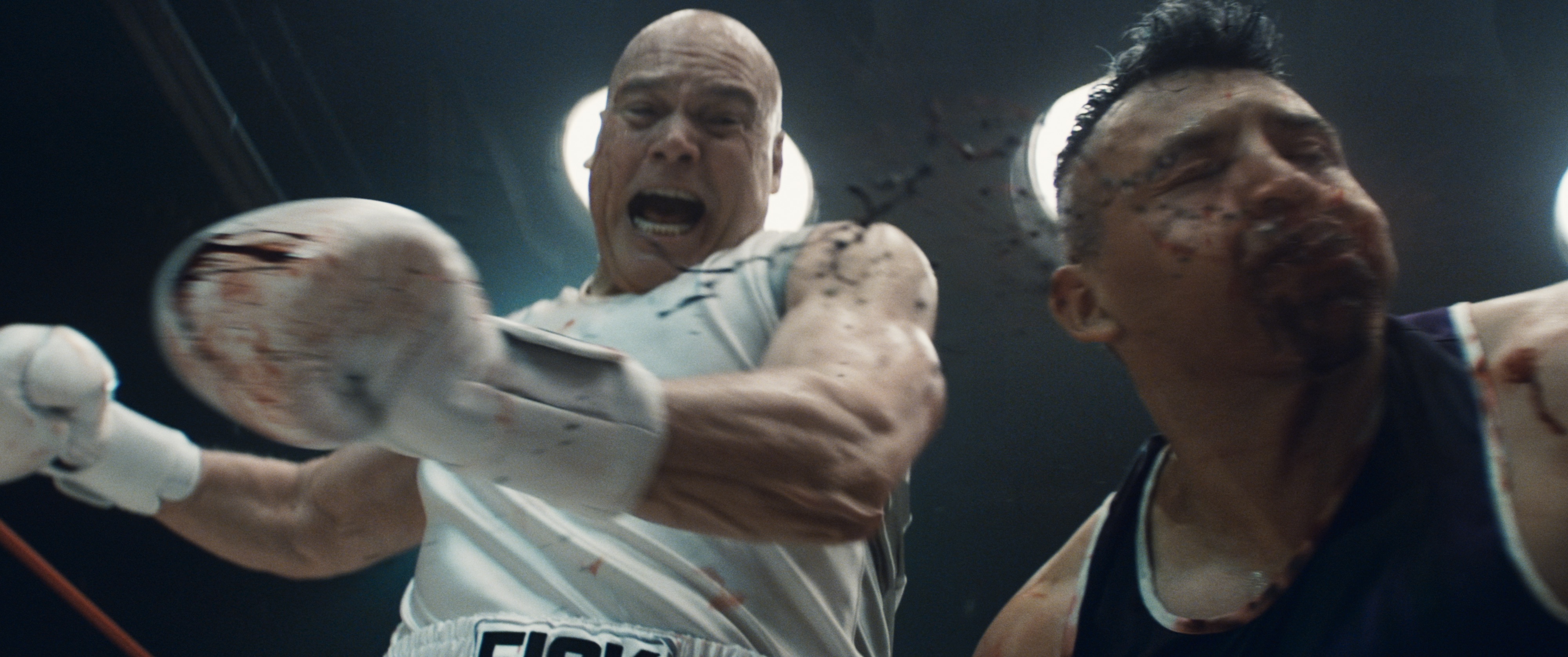
There is also a subplot featuring Fisk training and then stepping into a boxing ring. The action here contrasts sharply with its bloody, brutal bone-crushing force.. Where Murdock is a food processor, Fisk is a sledgehammer, shot in a way that makes you feel every ferocious blow. It delivers some of the most visceral action Marvel has ever put on screen.
The heart of the series remains the compelling yin-yang dynamic between Murdock and Fisk. Some of the biggest punches they throw are not physical ones, but the words they use to attack each other, relentlessly grappling in a moral and cerebral grudge match where no one is throwing in the towel. Charlie Cox brings even more nuance to Murdock this season, portraying him as deeply internally conflicted. His strict moral code is challenged by his grief and the desire for revenge following the violent loss of his dear friend, Froggie, as well as watching Fisk’s growingly crushing grip on the city, one that leaves innocent people dead in its wake.
On the other side is Fisk himself, a sociopath who genuinely believes the violence and control he wields are for the greater good. His rhetoric and rise carry echoes of Trump’s, framed in a similar vein as “peace through strength.” The more you hear Fisk’s dramatized justifications for his overreach of power and destruction of liberties, the more unsettling the reminder that we are watching elements of 2026 America unfold in all their horror. While tackling these broader themes, the show stays grounded in Hell’s Kitchen and the battle for New York’s soul.
Whenever I watch something that covers themes or challenges of today’s world, I wonder: who watching thinks they are the good guys? Knowing today’s divided world, there must be viewers out there supporting Fisk and his beating of protestors, caging of citizens whose civil liberties have been trampled, and the erasure of privacy rights.
As mentioned, there are a slew of characters. I will not list them all or explain their roles in the bigger picture. It would take way too much time. My favorites include Michael Gandolfini, who is echoing his father’s charms, as Daniel Blake. Daniel is the loyal supporter whose friendship with BB Urich, played by Genneya Walton, is an interesting relationship to watch because both are trying to get closer to Fisk but in opposite directions. Blake, driven by blind ambition, is looking to be a trusted member of Fisk’s inner circle. On the other hand, BB is infiltrating Fisk’s inner circle to take him down as revenge for his actions. Blake is climbing Fisk’s ladder while BB is more set on sawing it down.
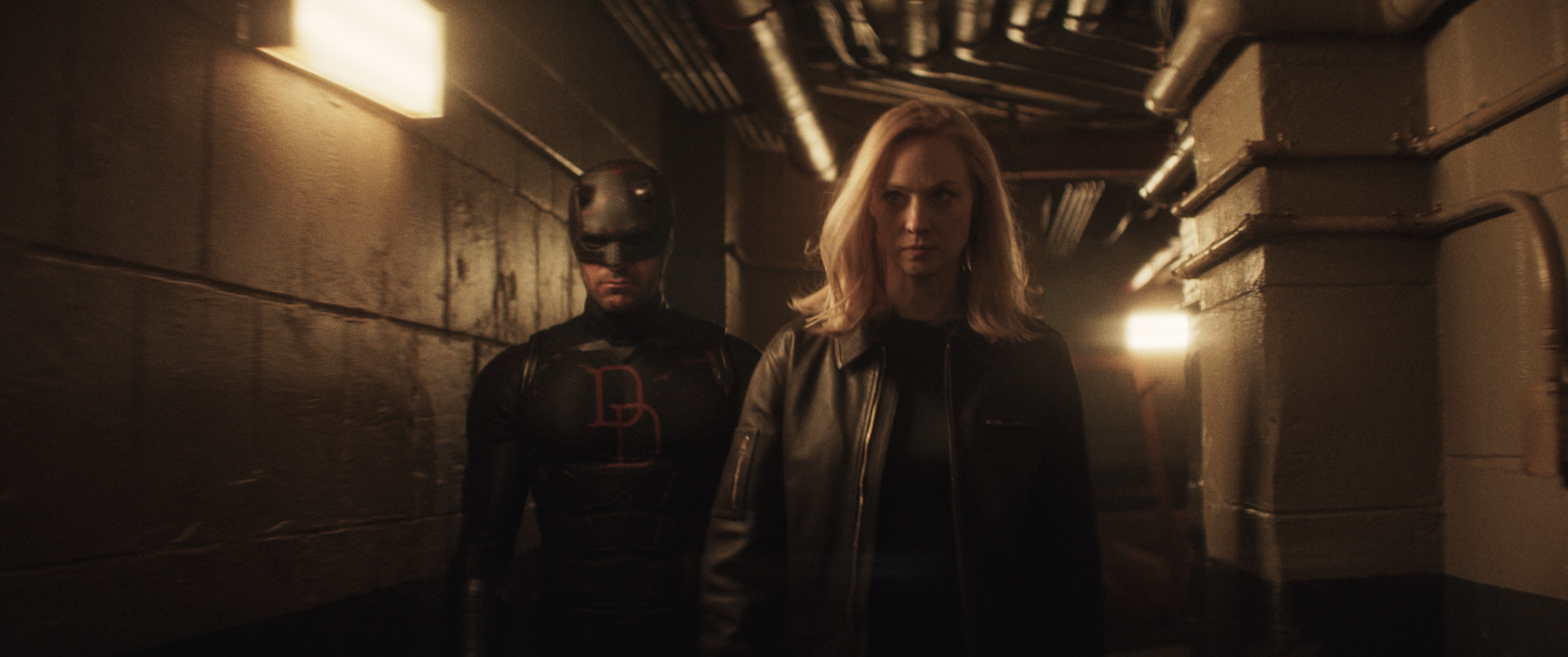
The other standout is Bullseye (aka Benjamin “Dex” Poindexter), played by Wilson Bethel, who acts as the vigilante devil on Daredevil’s shoulder. Whenever he is on screen the level of anticipation of chaos increases. While he has a moral code, it is very different from Murdock’s, and it leads to high energy, break-neck speed showdowns. He typically faces off against a group of baddies (because one on one would not be a fair fight) and turns everyday items into flying, ricocheting weapons of death. In a series highpoint diner scene he uses knives, forks, plates, and anything else for the series’s most creative takedowns. Bullseye is there to add insult to injury, literally. If Murdock is not going to take revenge on his enemies, Bullseye will do it for him without a drop of mercy.
Woll brings real fire to Karen Page this season, and more of her would have been very welcome. She is noticeably more physical this season, training and fighting alongside Matt in preparation to resist against Fisk’s regime, fully embracing her vigilante edge while still challenging Matt’s moral code. Other welcome parts of the cast include Matthew Lillard, who plays just the slippery slimeball you would want in this grim setting as Mr. Charles. While Krysten Ritter’s return as Jessica Jones is worthy of hyping up, she too could have benefited from much more screen time and a few more brawls for my taste. The same goes for Tony Dalton as Jacques Duquesne aka The Swordsman, who makes the most of the charm he exudes and the masterful, devastating swordplay as he steal scenes.
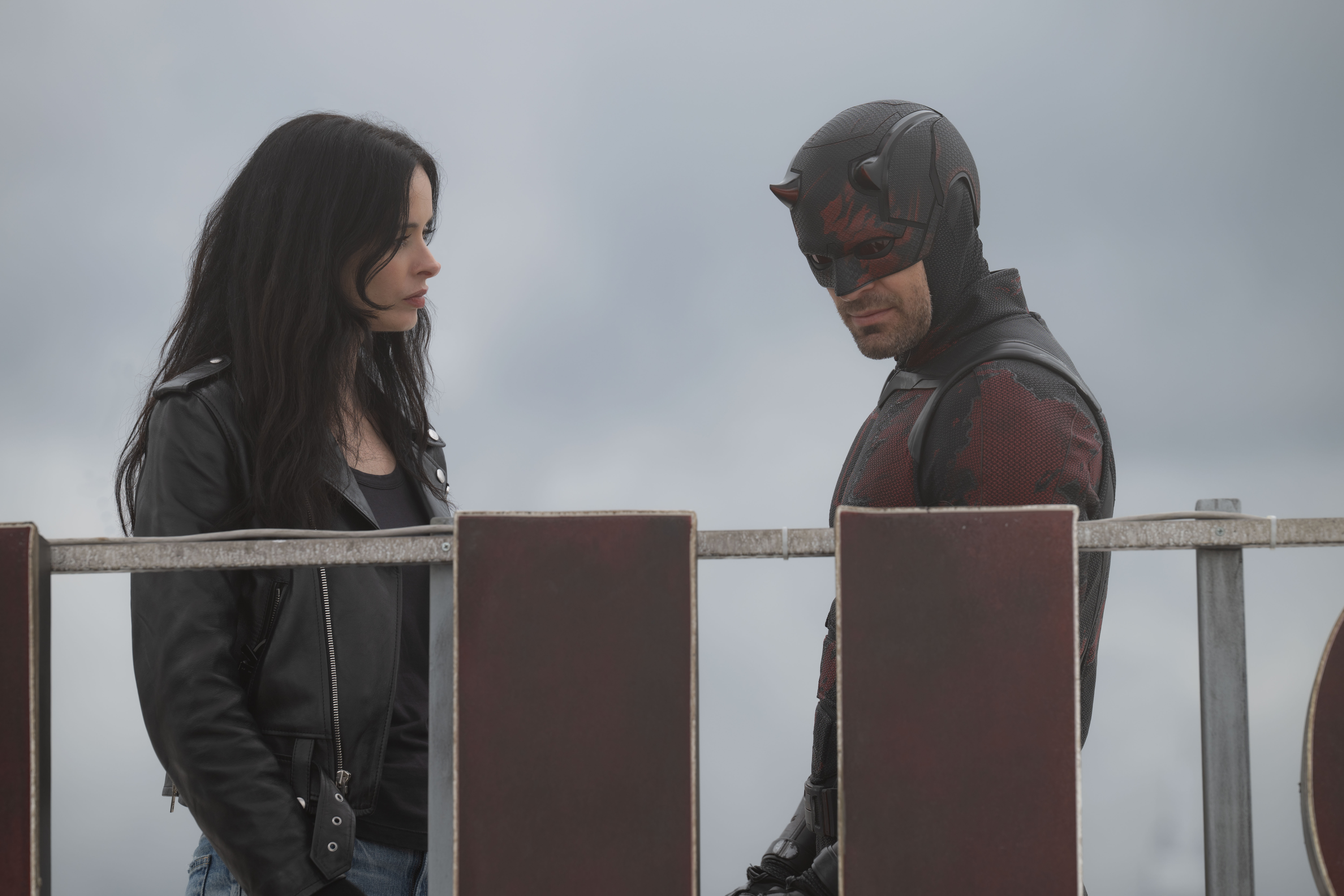
Ultimately the season takes a slow-burn approach, building like two boxers circling the ring before unloading at the end of each round. The finale is a full-on slugfest that delivers substance over style, with still plenty of style, and feels earned thanks to the smart moral chess game built across the season and characters closing out one hell of a heart-pounding ride.
The show combines explosive action, intelligent Sopranos-like crime drama, intense moral conflicts, and one of the most gripping courtroom scenes in recent years, all wrapped in frighteningly timely storylines.
Overall, Daredevil: Born Again Season 2 is an ambitious, uneven at times, but gripping season that delivers some of the most timely and unflinching storytelling Marvel has ever produced. Despite the plate occasionally being too full, the visceral fights and moral complexity anchored by the powerhouse rivalry of Charlie Cox and Vincent D’Onofrio make this a main course that leaves you fully satisfied, yet anxiously hungry for more of what Hell’s Kitchen has to serve next.
SCORE: ★★★★ out of five stars
Season two of Daredevil: Born Again premiered on March 24th and will continue with new episodes releasing every Tuesday, exclusively on Disney+.


Comments
Loading…