

 Steven Prusakowski
Vince Gilligan is a genius. Breaking Bad firmly planted him on my radar and quickly everybody else’s. You cannot have a conversation about the best of TV without someone bringing it up. My response is always, you’re right to mention it, but did you watch Better Call Saul? It was a series I did not want, but now not only love, it is on my Mount Rushmore of TV, as discussed frequently on my TV Topics podcast, ahead of Breaking Bad.
The reasons are plentiful, ultimately coming down to Gilligan’s ability to expand and enhance the already beloved universe of Breaking Bad, while making Saul Goodman (Bob Odenkirk) a lesser character originally often used for comic relief into a layered, complex, tragic character shaped by his moral compromises. I rarely say this, but it is an absolute masterpiece. (For naysayers, push through seasons one and two; they are crucial to Saul’s story, and once you do, the show finds its groove and becomes much more accessible for people coming over from BB.)

I am sure you are saying, WTF does this have to do with Apple TV’s Pluribus? The answer is simple: Gilligan’s involvement and the casting of Rhea Seehorn was all I needed to know to commit to watching; no trailers, no descriptions, no arm-twisting needed – I was in 100%. Seehorn, who to many was an unknown when watching Pluribus, had proven herself endlessly on Saul as Kim Wexler, Saul Goodman’s partner-in-crime. By the end of the series, not only is she so much more than his “sidekick,” she is as layered as Saul/Jimmy – the show’s secret weapon hiding in plain sight. In Rhea and Vince I trust.
Some of Seehorn’s best work is found in the quietest moments. Like her masterclass in acting during Better Call Saul’s penultimate episode, “Waterworks,” Seehorn turns silence into a subtle exploration of Carol’s psyche and soul. How she was not an Emmy frontrunner is beyond me. There are scenes I have watched several times only to discover more layers within, often tapping into my soul and making me not only watch Seehorn, I feel like I know her.
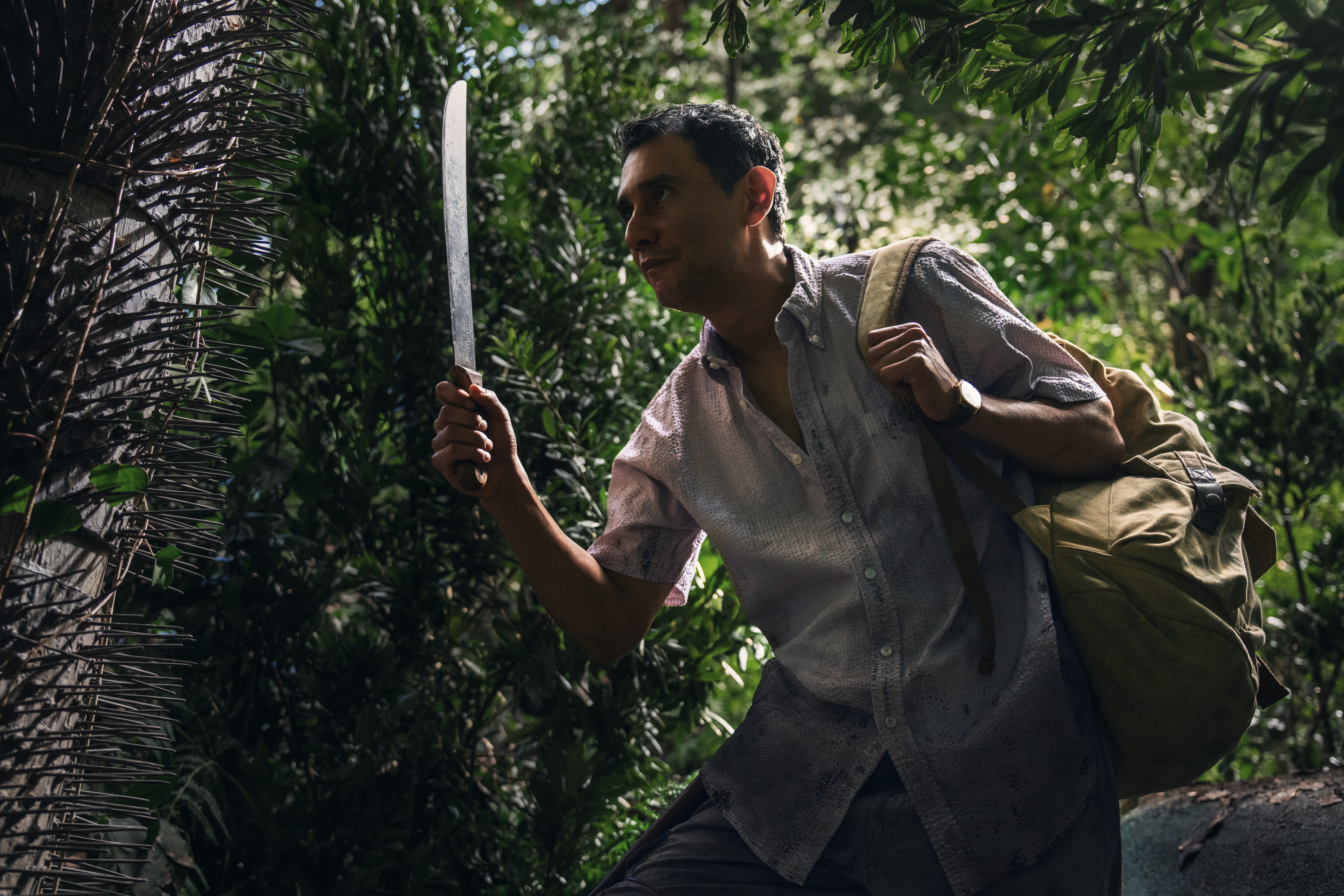
This is especially true in the last 15 minutes of episode six of Pluribus where (ignoring the blaring music and fireworks), if you observe the subtleties, so much is said without speaking a word, the fragility of humanity on full display under the guise of boredom and self-destruction. Add to that her comedic, brazen, and often abrasive scenes with a limited number of scene partners like Karolina Wydra, Carlos Manuel Vesga, Samba Schutte, and Jeff Hiller, and Carol has far more to offer than she initially projects. I cannot wait to see more.
So, going into Pluribus completely blind was not a leap of faith; it was a decision, and it only elevated the experience. For that reason I will not share many of the details of where the series goes, keeping it relatively vague. (In other words, stop reading now and just go watch it.) I will share this, the sci-fi tangential series revolves around Carol (Seehorn), a reclusive romance novelist and a pretty miserable person. She would rather disappear into seclusion than deal with the one filled with adoring and needy fans. Soon she is surrounded by a world filled with happy, like-minded thinkers aiming to please her, and she must make a stand for herself and all of humanity.
Like Gilligan’s other work, details are revealed deliberately and patiently, leaving viewers with a lot to talk about and few answers, putting us in Carol’s shoes. Even though a good percentage of the series is spent with Carol and a few other characters in isolation, there is not a dull moment. As always, Gilligan’s writing, where developing characters who you can dissect and analyze with precision and will still find more to talk about, is complemented by his astute and crafty camera and visual style. There’s often much more storytelling presented without a word being spoken than pages of dialogue could convey.
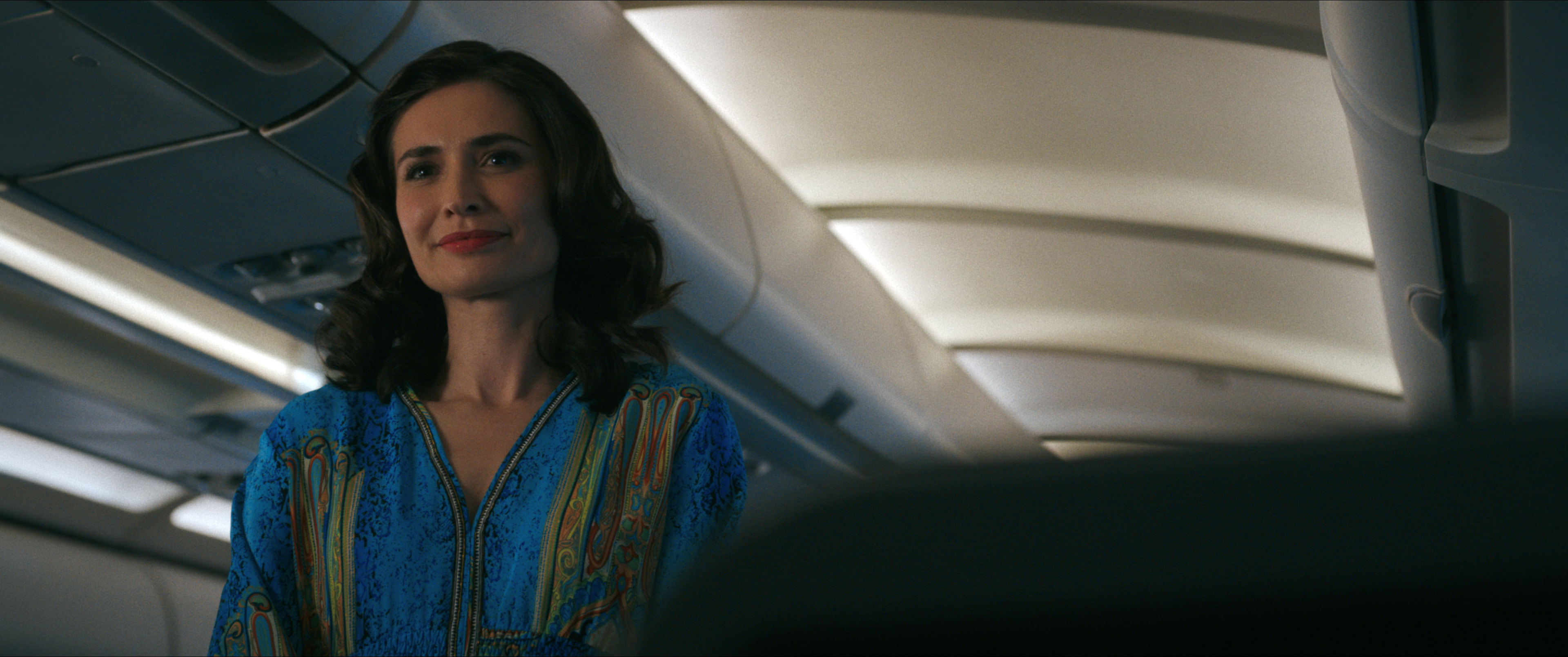
Fans will analyze every brushstroke on the Pluribus canvas, piecing together the mysteries behind the intrigue. But, like other Gilligan series, this is not about the mystery; it is about the characters, and he patiently develops some of the most nuanced characters on television. While I cannot wait to learn more, I more so want to spend more time with Carol, Zosia (a spectacular Karolina Wydra), and Manousos (the equally captivating Vesga) to see what humans do when humanity isn’t quite what it was. It is kind of like the Un-Real World: “This is the bizarre story…of two strangers…picked to live on the planet…and have their lives put under a microscope…to find out what happens when humanity starts being polite and stops being human.”
Pluribus is minimalized and completely stylized television, like a gourmet meal where you look and ask yourself, “Is that it?” But then, as you consume it you experience the thought and care behind every creative decision. The driving storyline will keep audiences talking, but the meditation on human connectivity and choices, the changing world of technology, isolation and what it truly means to be human is what will resonate long after the bigger moves, keeping you contemplating in the safe isolation of your own head.
The series has smart, stunning cinematography and art direction that can be analyzed frame by frame, quietly helping to thoughtfully tell Carol’s story by adding layers of visual depth to supplement the often limited dialogue. On the other side of the spectrum are the more obvious needle drops that break the silence and inject energy and emotion like only the perfect song can. The cast, while limited, makes great use of some very familiar faces and new ones that cleverly fill out this world.
Speaking of cleverness, the show is packed with it, but never for the sake of being so. He takes purposeful chances here and in a world of mindless scrolling a little patience will be needed for some. But, if you can unplug from the internet hive for an hour at a time, it is some of the most rewarding television out there.
Brilliant.
SCORE: ★★★★★ out of five stars
Watch Pluribus exclusively on Apple TV.


Comments
Loading…