
 Cory Stillman
Quick! Think of your favorite movie score. Got it? Great, now tune in to Hot Wheels RacerVerse on YouTube and you are likely to find an innovative tribute to those iconic music cues that just danced across your mind. Such innovation is nothing new for RacerVerse composer Spencer Creaghan, whose award-winning career has spanned multiple genres of music, film, and TV.
Creaghan cut his teeth composing orchestral arrangements for symphonic metal, a genre that continues to influence him today, even as he pays homage to the music of such iconic properties as Marvel, Star Wars, DC, and more.
“My Star Wars scores have all the orchestral chaos and big brass triumphs you’d expect from a Star Wars score, but merged with my rock and metal background, with an emphasis on propulsion, headbanging, and drive.” says Creaghan. “As a colleague told me after they heard it, ‘it sounds like Star Wars, but undeniably you.'”
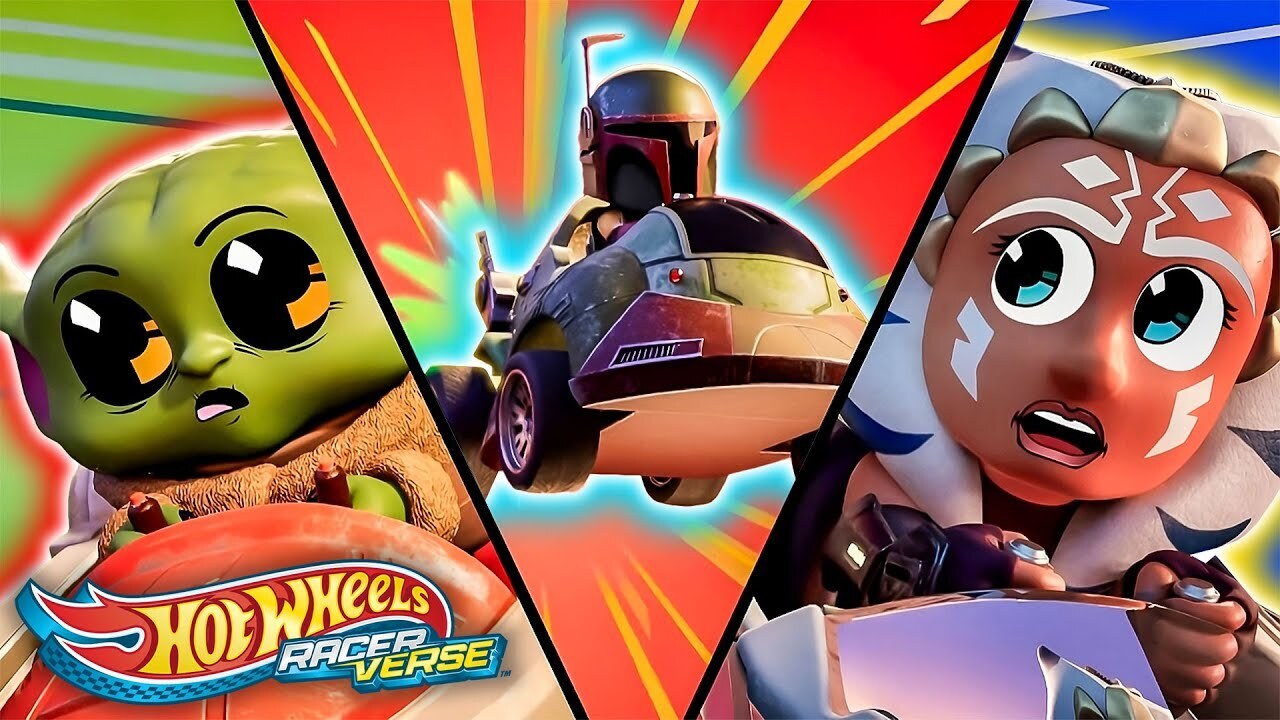
That description is likely fitting for just about any of Creaghan’s compositions on RacerVerse, where he was given the complex task of nodding towards beloved franchise music while simultaneously making the score his own.
“I was unable to use the iconic melodies we’re so fond of,” explains Creaghan. “While perhaps seen as a limitation, I viewed this as a way to inject my own musical voice into these well known musical worlds. While the melodies may be absent, I took my decades of research as a fan of these franchises into full effect, tipping my hat to the musical language we’re familiar with.”
Indeed, Creaghan’s musical journey on RacerVerse bred not only a sense of familiarity, but a deep nostalgia for the composer’s childhood. Iterating upon scores that shaped him, Creaghan quickly recognized the Hot Wheels series as the most rewarding challenge of his already accomplished career.
“This score brought me back to being that 15 year old kid who decided he wanted to be a film/TV composer. There is so much love poured into these notes. Love for the franchises featured, love for the scores I was inspired by, love for the stories and characters I got to score, and love for the music written specifically for them.”
Check out our full conversation with composer Spencer Creaghan below!
Your recent work scoring the Hot Wheels RacerVerse series weaves in melodies from some of Hollywood’s largest IPs including Marvel, Jurassic World, DC, and Disney/Pixar. How did you pay tribute to each franchise’s iconic music while also putting your own stamp on the score?
Hot Wheels RacerVerse is a dream of a show, scoring franchises I’ve always dreamed of working in. Though I should be clear off the top, I was unable to use the iconic melodies we’re so fond of. While perhaps seen as a limitation, I viewed this as a way to inject my own musical voice into these well known musical worlds. While the melodies may be absent, I took my decades of research as a fan of these franchises into full effect, tipping my hat to the musical language we’re familiar with. For example, for Marvel, my score merges the big brass fan fare staples of Alan Silvestri and Michael Giacchino, with the trip-top electronic influences of Daniel Pemberton’s Spider-Verse scores. My DC theme bares nostalgic familiarity to the 1960s series theme, orchestrated as if it were by Danny Elfman, with a bold melodic theme inspired by Hans Zimmer and Lorne Balfe’s Batman and Lego Batman scores. Disney/Pixar similar has subtle homages to Randy Newman’s jazz piano playing, Nightmare Before Christmas’ holiday stylings, and massive chorus-like statement of the Hot Wheels RacerVerse theme when our Disney Princess are on screen.
Do you have any personal favorite episodes you can tell us more about?
Easily, it has to be the third-part Star Wars episode! I grew up with the Star Wars prequels, and Revenge of the Sith’s score was on repeat throughout my entire young adult and teenage years. All the Star Wars scores were really, but Revenge was my go-to. 20 years of study and listening later and I took everything I had learned from those scores and was finally able to apply it officially to a Star Wars property. However, I didn’t want to just write a John Williams “sound-alike” score. Instead I was heavily inspired by what other great Star Wars composers had done: infuse their own voice into the world of Star Wars, sounding like both themselves and John Williams. My Star Wars scores have all the orchestral chaos and big brass triumphs you’d expect from a Star Wars score, but merged with my rock and metal background, with an emphasis on propulsion, headbanging, and drive. As a colleague told me after they heard it, “it sounds like Star Wars, but undeniably you”, which was my hope in approaching all the Hot Wheels episodes.
Beyond all those iconic IPs, you are obviously also working with the Hot Wheels property itself. Did you have a prior relationship to Hot Wheels, and how did you reflect its brand in the show through the music?
I was brought into the series because I had scored Mattel’s other children’s series Matchbox Adventures. Matchbox takes a similar format of cutting between children playing with their toys and a realised version of their imagination. For Matchbox, my score is very 90s orchestral action, inspired by the likes of James Horner, Alan Silvestri, and James Newton Howard. They seemed to like what I did for that show and invited me to score Hot Wheels! When they approached me with the show I didn’t realize they were collaborating with all these major franchises, but you can imagine my creative excitement when I got the job and they instantly told me what the season was going to feature!
Hot Wheels RacerVerse is a major departure from your other recent credits, primarily in the horror space – SurrealEstate and Hell Motel. How does your approach differ across these projects in terms of genre, but also audience and tone?
Where most children’s animation is scored as small little cues, I approached Hot Wheels a lot similar to how I would score SurrealEstate or Hell Motel’s action scenes: that being, as one big action cue covering beginning to ending of the story, so as to keep momentum, energy, and excitement high throughout the entire episode’s run time! I found this approach more affective than the more traditional method, and frankly more fun! This approach keeps the audience engaged from beginning to end, as even if there are small breaks in the story, we never lose the propulsion of the story until the characters have reached the finish line. Each episode ends with a similar arrangement of our main Hot Wheels Racerverse theme which helps mark an official conclusion to the race, but until we get that more light pop version of the theme, we’re go, go, go! And the score needs to reflect that intensity to keep the audience engaged from those first seconds until the end.
Even within the Hot Wheels series itself, you are working with numerous different settings and stories that jump between garage rock orchestral fusion to a Danny Elfman / Hans Zimmer-inspired Batman score. Is there a particular constant in your melodies that you tend to build your score around, or is each episode an entirely new process for you?
Absolutely!! I’m a big believer in the power of themes, recurring motifs, and the development of these repeated melodies. Being unable to use the iconic IP themes was a blessing in this case as it avoided what most concerned me, which was “theme stew” where there’s too many melodies bouncing around, none given enough time, and so the flavors can no longer be distinguished. Even between the episodes I wanted to avoid this. So the entire series is balanced on the two central themes: the Hot Wheels RacerVerse fanfare (a 5 note melody that quite literally spells out “Hot. Wheels. Racer. Verse,” oscillating between the 1 and 5 of the scale. The second theme being a fun rock-like riff that is used to show adventure, danger, and excitement. Both themes develop A LOT throughout the episodes. Sometimes their statements are clear, bold, and recognizable, and other times they’re subtle and used as building blocks that the other themes come from. For example, both my Batman’s sweeping lush brass fanfare, my bold heroic Marvel fanfare, AND my menacing Darth Vader motif are all built from this second rock-like Adventure theme. The main theme also gets this treatment, with one of my favorites being how it becomes ancient and mysterious in Jurassic world, and then in the Disney/Pixar episode the main theme is developed to evoke an epic “Alan Menken styled” Disney Chorus! There was truly no other approach to this score, and it was extremely creatively exciting to figure out how to evolve these melodies throughout all the musical worlds.
Are there any moments in the Hot Wheels score that implement unique instruments or real world sounds?
Given its influences and franchises, Hot Wheels is a fairly traditional score, big orchestra. However, being a rock and metal guy, every episode has a driving drum and bass track with sprinkles of guitar. For the Nickleodeon episode, Striker’s theme is full on metal, the ninja turtles have a garage rock rendition of the main theme, and then we have Sponge-Bob riding along with them whose theme evokes summer beaches and Hawaiian music that the show is known for. To pay homage to Ludwig Goransson’s Mandalorian score, my theme for the Mandalorian also includes bass recorder. Then there’s the music for Moana and Jurassic World which incorporate percussion from all other the world. And then of course the jazz big band sounds for some of the iconic Pixar characters like Mr. Incredible and Monsters Inc’s Mike Wazowski. Every musical decision came back to tipping my hat to these amazing scores, infusing them with my own brand of energy and love of high-octane rock and metal. So every episode is equipped with a driving bass, kick, snare, and fast high hats, with a little bit of metal riffing thrown in for good measure!
Is there anything else you’d like our audience to know about your work?
This score brought me back to being that 15 year old kid who decided he wanted to be a film/TV composer. There is so much love poured into these notes. Love for the franchises featured, love for the scores I was inspired by, love for the stories and characters I got to score, and love for the music written specifically for them. It’s one of my favorite shows I’ve ever scored and I still go back to the music from time to time to revisit the experience. I hope this pure youthful enjoyment is felt in the music. Every day felt like play even when it was challenging, and solving every problem was the highest reward. I think I became a better composer for it. This series is in many ways a showcase of how I would score these franchises and I hope listeners and viewers get excited by what they see and hear!


Comments
Loading…