
 Steven Prusakowski
I do not say this often, but Ayo Edebiri has been a revelation. Since The Bear’s debut, her portrayal of Sydney made me take notice as she anchored the chaotic brilliance of the FX series. Two more remarkable seasons in front of the camera, Edebiri builds upon a character whose ambition and vulnerability make her relatable, a welcome calm among the storm of madness. The ambition extends beyond her acting as she now, in season three, takes on a new challenge – directing.
Edebiri directed the standout episode “Napkins,” a deeply emotional exploration of Tina (played by Liza Colón-Zayas) as she hits a low point in her life. Her work behind the camera helps put us in the shoes of Tina as the world suddenly is a much bigger, lonelier place. “Napkins” was not only one of my favorite episodes of the series but also of all of TV this year. It was a pleasure to have the chance to speak with the talented actress/director and explore her creative decisions when making an episode of television that ripped my heart out and somehow, in the end, left me feeling incredibly hopeful.
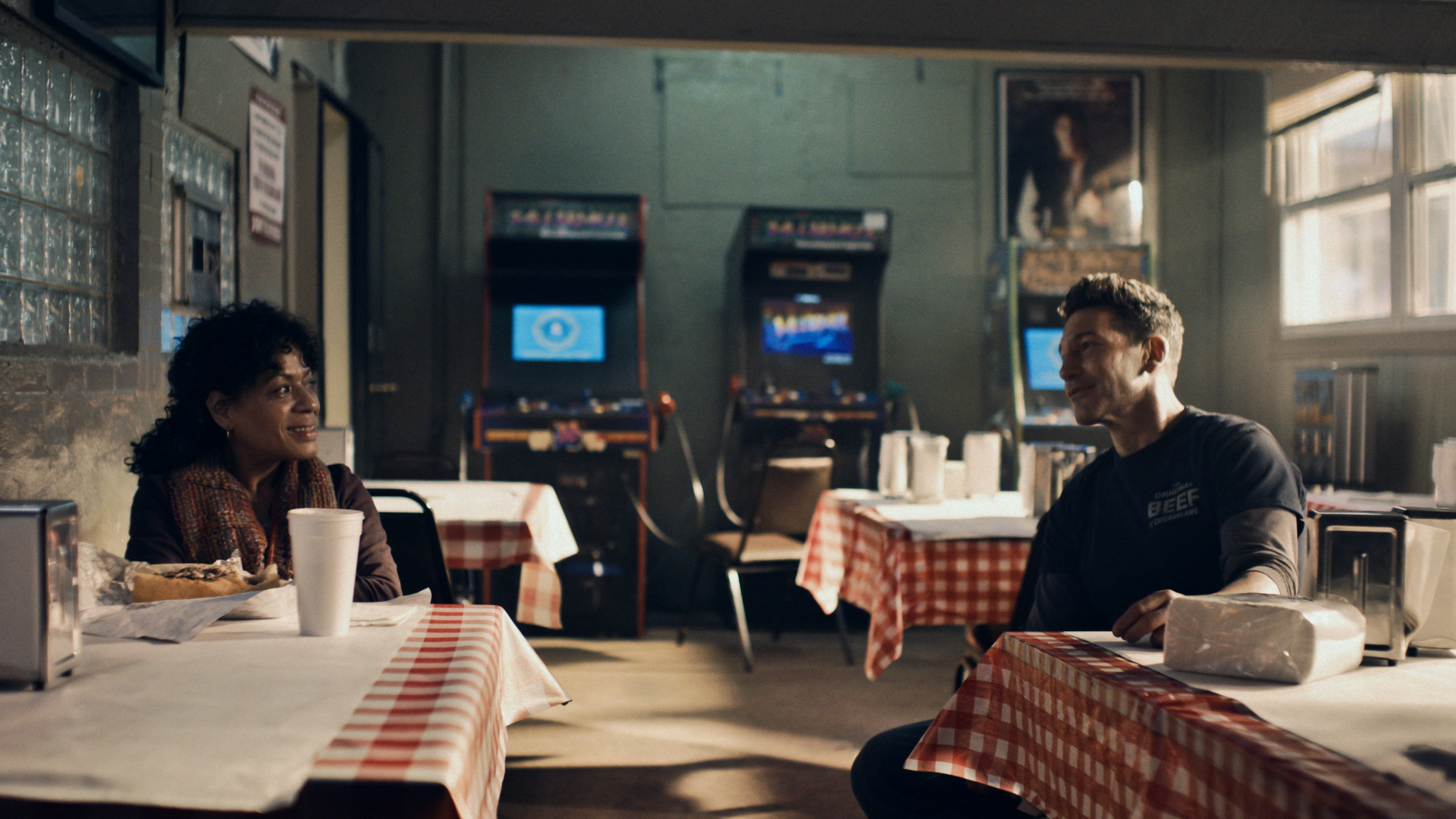
On paper it may seem like a simple premise, a woman loses her job and looks for work. But, through Edebiri’s direction and visual storytelling combined with the raw, nuanced, and powerful performance of Colón-Zayas that strips away the character’s tough exterior, all the ingredients combine to make an episode of television that taps deep into what it means to be seen, to have a home, to have dignity. It is a heart-breaking and beautiful piece of work that explores even bigger themes while also keeping it small and human. Even typing these words has me revisiting the emotions I felt watching it.
(I must not forget Jon Bernthal who gives some of his best work during this episode. He’s the warm hug at the end of a rough day.)
Our full conversation with Ayo Edebiri is best experienced by watching, as it delves deeply into her directorial choices for The Bear’s “Napkins” episode, with her passion shining through in ways text can’t capture. Beyond her enthusiasm, Edebiri’s creative instincts, intelligence, drive, and ability to infuse humanity into her work distinguish her as an actress, director, and writer. Her age is irrelevant with such talent—and she was incredibly kind, too.
During our talk we cover Ayo’s work in front of the camera, behind the camera, the cinematography, music choices, Sydney’s big decision as we head into season four ,and more. Watch the full conversation with Ayo below as well as these highlights.
On her collaboration with Colón-Zayas:
“We just have a lot of conversations. Talking about her journey, making sure it felt true to the character she’s been playing, but trying to relish this opportunity to see her in a space that we haven’t yet… In her home life, in her life before getting there, and what it means to be a person living in a capitalist society that breaks you down. It exhausts you and assigns worth to you and dehumanizes you at moments, no matter your past, your credentials, or your humanity… She’s so amazingly petite, Liza. And so there are moments where, with [cinematographer] Drew Daniels, we wanted to go close and relish her eyes, relish the micro-expressions she can make so easily, the fount of emotion she has.”
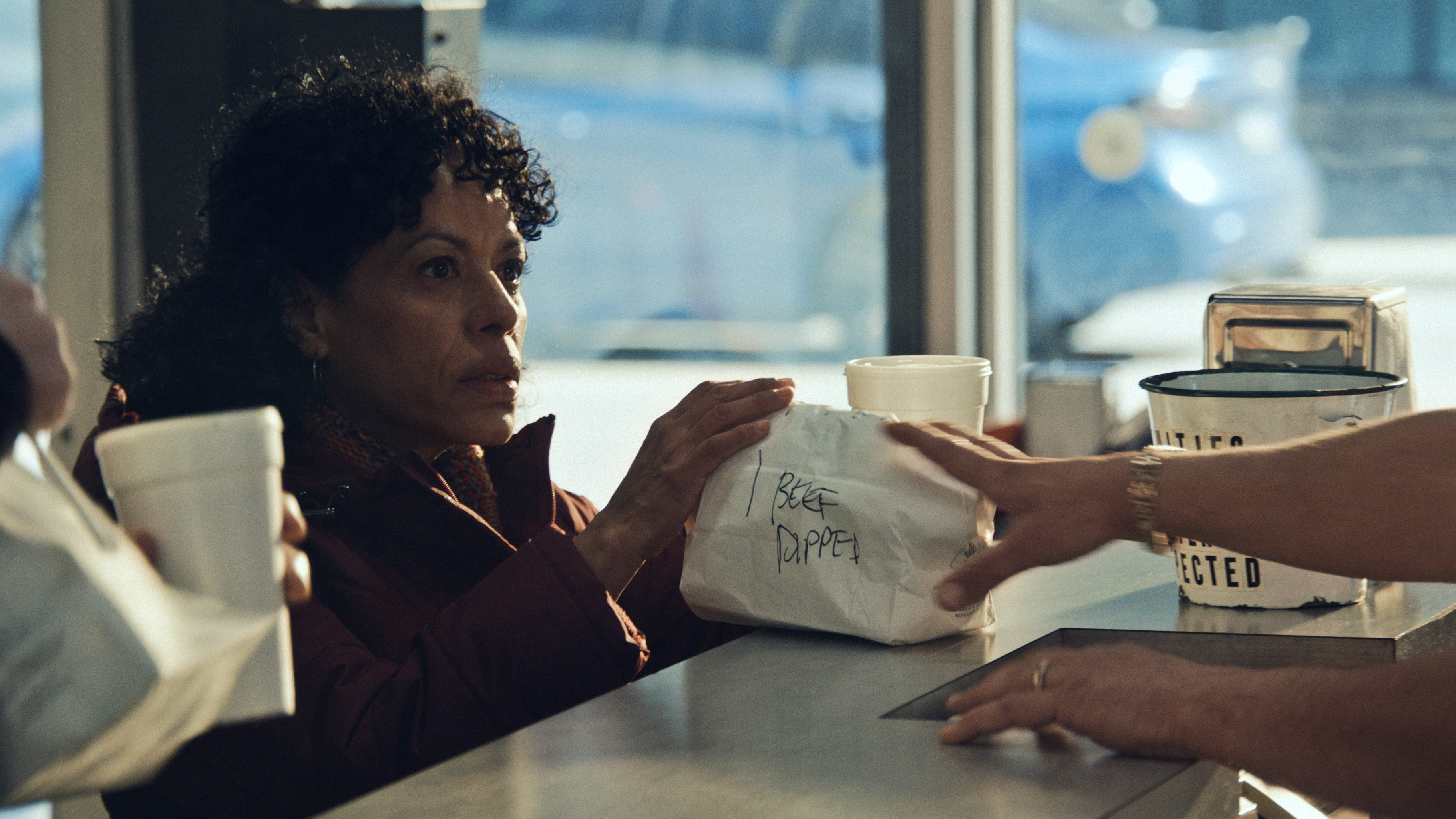
The episode’s turning point, where Tina enters The Beef is a masterstroke of storytelling. A simple handshake and introduction by Richie (Ebon Moss-Bachrach) provide the spark of dignity Tina desperately needs to restart her fire.
When we were thinking about that moment… it’s both this moment for Tina to actually get [like] people are treating her as a human being for the first time, basically, besides her husband in this episode… She’s not really being treated with dignity. And it’s like this is the first time that someone’s really looking at her in the eyes and acknowledging her as a person. We also get to do something [where] we know that Richie is good with people. Let’s see a spark of it, even when he’s his unrefined, unpolished version.
On the visual language of the episode:
One of the main references was season one of the show because we knew that the end of the episode would be building to that. To the return of like our really, really tight closes and like intense zooms and just like claustrophobia in the camera. And so we wanted to track the journey visually to get there and also create this language that corresponded to the arc of the script, which is order and routine and then order disrupted, trying to find meaning in that and then complete chaos in The Bear, in The Beef, but chaos that feels like home and that makes sense.
On the parallels between Ayo and her character Sydney:
I think when you’re the young person at the job or the only woman or the only whatever… you have that feeling of just wanting to prove yourself so badly. In a lot of writing jobs, when I first started out, I was often the youngest person in the room. So you have that feeling of like, I might be young, but I don’t want anybody to know it.
On if Sydney’s season three cliffhanger choice is decision between betraying Carmy or betraying her own ambition:
I definitely think that that’s like a interesting way of putting it. Which definitely is it’s like also that like eternal question of like, what is it that we owe to each other? You know, it’s also like, what does Carmy owe her? Does he owe her like an actual like functional working place or like an opportunity to grow? And like, whereas like his own ambitions fall into it, too. Like he sort of promised her like mentorship and partnership. And if he’s not, you know, living up to that end of the bargain, you know, what does she owe him?
Find out what decision Sydney makes when The Bear, season four premieres on June 25th on Hulu. In the meantime, watch Ayo’s masterful work directing “Napkins” – also on Hulu.


[…] Interview: Ayo Edebiri’s Direction of ‘The Bear’ Finds Hope and Humanity Amid Hardship… […]