

 Maxance Vincent
A Complete Unknown marks Tod Maitland‘s sixth Academy Award nomination in a career of over 45 years and working on over 100 films. Sound is an integral part of the experience of watching a part of Bob Dylan’s (Timothée Chalamet) story, not only in its live music performances but in how the sociopolitical context of the times Dylan lived in encouraged him to evolve folk music from the acoustic confines they were into uncharted, electric, territories.
During our interview, seen below, we discussed how director James Mangold had a specific vision for the film’s soundscape, which led to many challenges on set in recording some of the live music performances and giving a distinct sound to the acoustic and, ultimately, electric instruments of the movie. We also discussed how they wanted to make sound an integral character of the movie, and part of Dylan’s evolution from his beginnings with Pete Seeger (Edward Norton) to the icon he became after “going electric,” despite much initial public outcry.
Read the full interview below:
Congratulations on a very well-deserved Oscar nomination for your work on this movie. I assume it’s always a great feeling to have your and the sound team’s work recognized at this scale?
Of course! It’s great.
I also assume it’s a great feeling for you and everyone else who worked on the film to see that the movie continues to resonate with audiences worldwide as more and more people get a chance to see it?
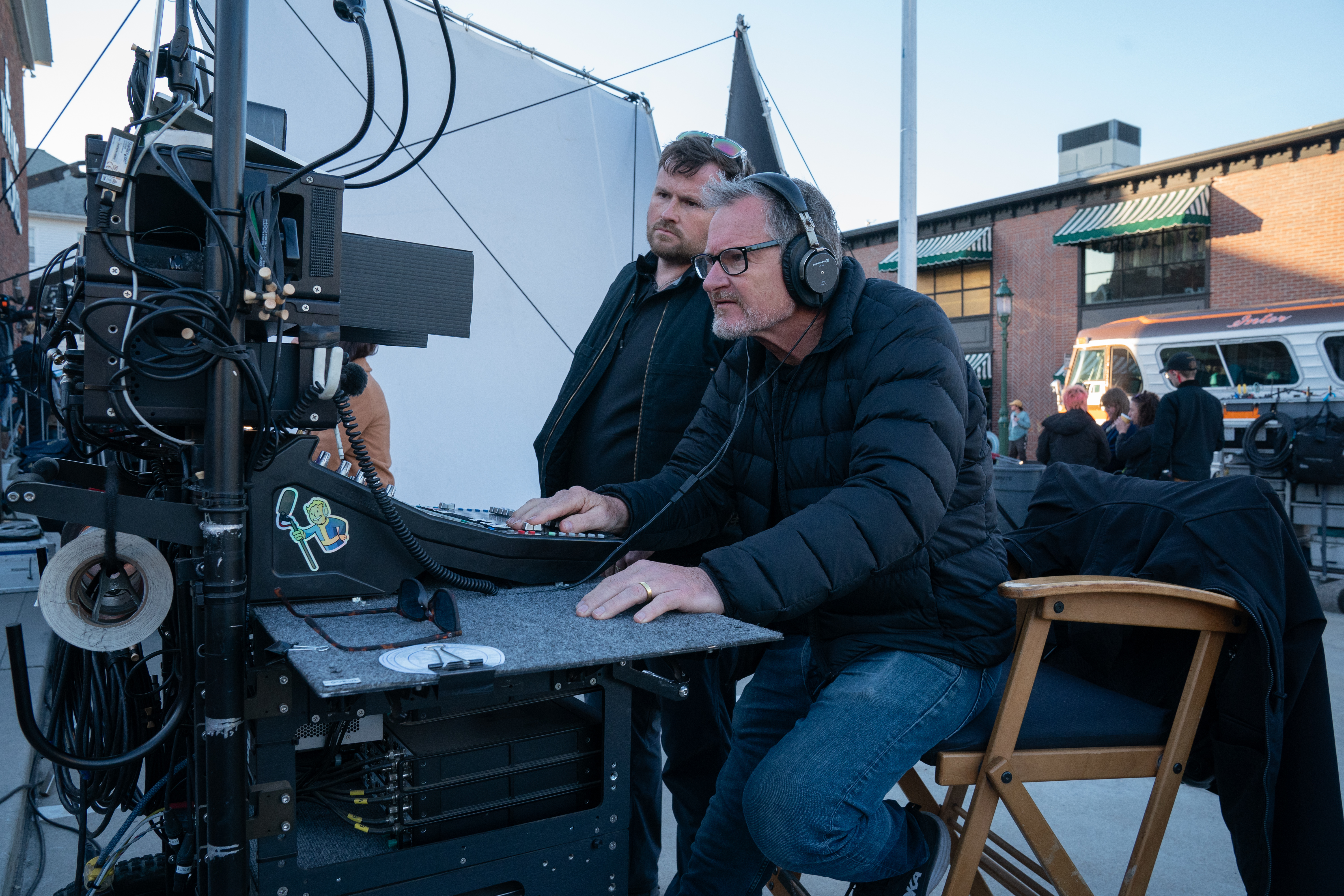
Yeah, and I’m in a great position to see the film while we’re filming it because, as a production mixer, I’m on the set. I have a monitor, and I’m listening to every single word. And I knew while we were filming it that it would be great.
I had a chance to see the movie during the one-night-only early access IMAX screening in December, which was probably the best way to see it in my area. It sounded phenomenal. I was taken aback by how amazing the sound was. I loved how immersive it was to plunge into this time period, especially when it came to the concert sequences, which were just incredible.
I’m very happy to hear that because the goal was to make this as authentic as possible. I grew up in New York, and I have been a sound mixer in New York for 40 years, recording on the city streets for the same amount of time. This film captured that feeling of being in the concert scenes, city life, and all of it. So I’m happy to hear that because it was our goal.
What were the main objectives in ensuring that the sound for the movie would be as immersive and enveloping for the audience as possible, particularly when it came to capturing the concert sequences?
It was all about getting it as real and raw as possible. That’s when the decision came early on to do it totally live because if we did it with any playback, it would have come across as fake. I had done sixteen music-based films before and never did one without a playback track. Even though we pre-recorded playback before we filmed, we threw all of that out and never used playback, earpieces, or even a click track for tempo. We recorded without the safety net at all. If we didn’t capture it on set, it wouldn’t make it into the movie. That was one of the things that made you really feel like you were there because it was like recording a live concert every day and recording an album at the same time. That made for a fascinating, challenging, and very rewarding experience.
Recording sound through this specific approach required a very strong vision from its filmmaker, James Mangold. Did he have a particular goal on what he wanted the movie and several scenes to sound like?
Jim is very in tune with sound, more so than almost any director I’ve worked with. Being the production mixer, I’m the one that’s on set putting the microphones, recording all the different microphones, recording the audience, tracks, and anything that happens. I sometimes had 40 microphones out recording all sorts of different things. What most mixers and production mixers do is a mix track. You have these 40 microphones; if I put them all out onto one track, it would be a mess. I do a mix that matches what the camera sees and try to do it as accurately as possible. Normally, directors seldom have any input on that. That sound will stay with the film until they get into post-production. That’s what the studio sees; everybody who watches the dailies will see it. For the next four months, that’s what everybody listens to. However, Jim was really on top of what that sounded like. He said, “I want everybody that sees this thing over the next four months to have the same feeling that we have here.” It was a pleasure. I like working with strong directors with real input; he has a lot.
What was the most challenging music-driven sequence to record?
The most challenging one was at the end of the film, during Newport ‘65. The way that Jim wanted to film it was as one shot. So we did a 23-minute scene with the railroad gang out, the MCs coming in, Bob coming out and doing his three electric songs, and then Baby Blue in acoustic. Another piece that got cut out of the film was the farewell song, which they always did at Newport. With all that chaos and everything happening on or off the stage while they were trying to shut the music down, I had microphones for everybody. I wired all of the stage mics, speakers playing back to the audience, playback monitor speakers going to the people on stage, and five microphones out for the audience because they played a significant part in this soundscape. They were very interactive. In that end piece, they start off loving Bob, but as soon as he goes electric, people start going against him. You have half the crowd for him and half against him. They became very much of a character in all of it. It was just like recording a live concert and then some because of all the other microphones I had on all the actors doing their dialogue throughout that 23-minute scene.

I like how, in the movie, we see the development of Bob Dylan through his music. He wants to evolve folk music from what it is into the future, away from the confines of acoustic guitar, with the choice of going electric, which he thinks about throughout the film until he decides to finally do it during Newport ‘65. Was a desire to track the development of the character throughout the movie, with how his music sounded like at the beginning, when he’s singing for Woody Guthrie in the hospital, versus the ending, where he does play the electric guitar? The sound is totally different from what it was at the beginning of the film.
One of the other challenging parts was recording Timmy when he wasn’t doing a performance piece. For all the performance pieces on stage, we sourced 42 period microphones, tested them all, and used them in the correct period for each one from 1961 to 65. Our microphones evolved with the character. For those scenes, like with Woody Guthrie, and even when he plays Masters of War inside the gas light, where there are no microphones on camera, I devised a very creative way to wire him. As I watched rehearsals before we started filming, I saw how Timmy held his guitar. He holds it up high on his body, like Bob did, which negated any possibility of putting a Lavalier microphone in a normal place where you would typically put it, between your breast bones. In talking to Timmy during rehearsals, I said, “Look. The only way I’m going to be able to do this and capture it well is to wire you in your hair,” which we ended up doing. It took a lot of finessing to talk Timmy and the hair department into it. I wired him in his hair and would put a wireless microphone inside the guitar and then use a variety of ambient mics strategically placed to capture the environment wherever we were, whether inside the hospital room, inside of a gas light, or in Pete’s cabin.
How do you ensure that the music and its sound, stay as authentic as possible to the way it sounded in the era in which the film is set?
I listened to a lot about Dylan beforehand, and what I do comes down to my ears. I get in my mind. I get the actors’ voices and singing voices in my head using whatever techniques I know. For this one, I used every trick in the book. Everything I’ve learned in 45 years of doing this just to create that sound. We recorded the movie over 12 weeks, but you see it in two hours. That voice needs to maintain a similar sound throughout the film. Sometimes, you film in a hospital room, cabin, or a club. The ambiance can change the quality of a sound a lot. That comes down to microphone and mixing techniques to blend them all in so that they sound similar throughout the movie. As you mentioned, there is an escalation in sound with his confidence and the quality of his voice. That was something that we were also very conscious of.
In terms of recording scenes with no music at all, where we get to know Dylan on a more personal level, whether in his relationships with his friendship with Pete Seeger, was there a process that differed from recording any of the live music scenes?
Yeah, good question. Timmy, or Bob, has four voices. He was a known mutterer, and you can hear it in the film; he mutters quite a bit under his breath. There is also his real voice, which you see when he’s with Sylvie at the beginning of the movie. Then, you have more of the quintessential Bob Dylan twang, with a lower, twangy type voice. He also has a very high, sarcastic twang. In capturing those four different voices, as I said before, I get an actor’s voice in my head, but for Timmy in this film, I had to have four voices in my head and try to maintain that sound throughout all of it. That comes down to different microphone techniques, booming and wireless, and everything else I can figure out what to do now.

I didn’t really know much about Bob Dylan. I had seen the movie Don’t Look Back before I saw A Complete Unknown, but that was about it. I didn’t know how big it was when he went electric. When you watch that scene at the end of the movie, and he plays the electric guitar, it sounds like a total revolution in music. It was radically different from what we saw throughout the film when he played with his acoustic guitar. Was there a contrast that you wanted to demonstrate between the more traditional sound of the acoustic guitar and the more modern, explosive electric guitar, especially when it came to capturing the festival where the audience doesn’t like it, Pete attempts to shut it down, but Bob keeps playing and carrying on, without caring what people are saying and doing.
That was Bob! Bob lived by his own rules, and he did exactly what he wanted to do. He’s a fascinating character. I don’t think you learn all that much more about Bob. The title A Complete Unknown is great because you come into it not knowing him, and you come out not knowing much more than the evolution of his music and style. Newport was built on acoustic, and the people in charge had such a problem with him going electric. It was the volume and the energy of electric music that took hold at that period. One interesting thing about working on this film was that we all know these songs so well because we’ve heard them for decades and decades. However, at that moment, no one had ever listened to these songs before, and every one was so brand new. For instance, when he was singing acoustic The Times They Are a-Changin’ at the first Newport festival, how the audience got involved and started picking up on the chorus. He just had that kind of bringing the audience along the way. When he went electric, he had half the audience for it and the other half thinking he was Judas, and the volume kept ramping up until the end of the film.
What is the process of mixing all of the sounds you recorded live in post-production?
This film was different. Usually, I’ll try to capture each sound as cleanly as possible. For instance, when we’re doing the Newport music scenes, and Timmy is out playing in the front, you have the dialogue pieces happening with Pete and the other members of the Newport festival in the wings. When you don’t see Timmy, you usually have the music. You would bring the music down so they could capture their dialogues clean, and then you would add that dialogue in on top of the music, wherever the music is in the story. In this film, we added sound everywhere. We tried once to do it without the sound or music over the dialogue, and the scene fell flat. From that moment on, we kept the sound going the entire time. To that extent, we added sounds even in the scenes we did on the streets, like for the Cuban Missile Crisis. We added Walter Cronkite’s voice on the television. We added sirens. We added the sounds of people panicking on the streets for the actors to give them that energy and help them feel like they were in that moment.
One of the best aspects of the movie is that the sound informs us of where we are in the story and what period it’s covering. I assume that was also a consideration when mixing the sound in post-production and working with Jim?
Absolutely. When he first arrives in New York, it’s the beginning of 1961, and Greenwich Village is a little tamer. When you jump to 1965, and he’s walking down the street, it’s so alive. The noise level is up. Everything is a lot louder. One of the main goals was to make sound a character in this film, which really doesn’t happen that often. There aren’t many opportunities on film to work with sound so much and make it a real character in the story, but this was one of them.
And is there something you would say was the most rewarding aspect of working on A Complete Unknown?
I would say the fact that we were able to record all of it. Now that the album is coming out, hearing all of my work, which we did live in front of a camera, is much more difficult than recording an album. When you record an album, you can put microphones wherever you want. But when you’re recording a film, you have to work within the context of a film and not have those microphones in the shot unless they are specifically there for the performance pieces. Being able to have the time to work with all of those different microphones and work with the progression of sound from 1961 to 1965 was lots of fun. The microphones back in the early days had a very mid-range sound to them. They kept evolving year after year, and we wanted to create that involvement. We wanted a different tapestry of sound for each one of the venues that we’re in. The ability to pull us all together without using the safety net of a playback track brought me back to my analog days when I used to record on a two-track Nagra. If I was recording this movie, there would only be two tracks, and if I didn’t record it, it wouldn’t be there. That was what happened in this film. That history of working back in the days before digital was incredibly helpful for me and this film.
A Complete Unknown is now playing in theatres.
[This interview has been edited for length and clarity]


Comments
Loading…