

 Robert Hamer
The phrase “Viggo Mortensen is right” is not something I have had the opportunity to say often – or, really, at all – in recent years, especially with his ongoing defensiveness over the indefensible “I worked for a famous person once and we totally became bestest friends” historical fan fiction Green Book and lack of contrition over his bothsidesism purity posturing eight years ago. However, in this instance, I wholeheartedly concur with the thrice Oscar-nominated star of films like Captain Fantastic and Crimes of the Future when he, as reported by Clayton Davis at Variety, made a very astute observation at the Toronto International Film Festival Tribute Awards earlier this week.
In fact, I want to amplify his message here on the Sunday Scaries:
Viggo Mortensen, who has collaborated frequently with David Cronenberg, took the stage to remind the audience of a glaring omission by the Academy Awards. Despite Cronenberg’s long and influential career, the director of A History of Violence and The Fly has never been nominated for an Oscar. Could Bill Kramer, the Academy CEO who is was in attendance, relay the message to the Directors Branch?
I sure hope so. Because good lord of the new flesh, for this man to have never even once received an Academy Award nomination at any point in his 55-year filmmaking career is absurd. Here is a true auteur who managed to become the name and face of an entire subgenre of horror, who had every incentive to coast on shallow B-movie fun with his gruesome body horror films, but instead committed himself to marrying his unsettling depictions of violence and gore with deeper thematic insights, as demonstrated by Scanners and Videodrome’s intelligent sociopolitical commentaries, potent character drama animating The Brood, and penetrating psychological portraits at the heart of films like Naked Lunch and Spider, long before those became the norm among less adroit modern horror storytellers. As a technical vanguard, he oversaw films that facilitated breakthroughs in makeup and practical effects, influencing the medium far beyond the realm of horror. He enjoys a sterling reputation among actors today, with Academy Award-nominated box office stars like Kristen Stewart and Paul Giamatti eagerly signing on to play relatively minor supporting roles in his films. “But Robert, do all of those accomplishments really vault him to the esteem of directors like Peter Weir or David Lynch?”
Yes. Yes, that is exactly what I am saying.
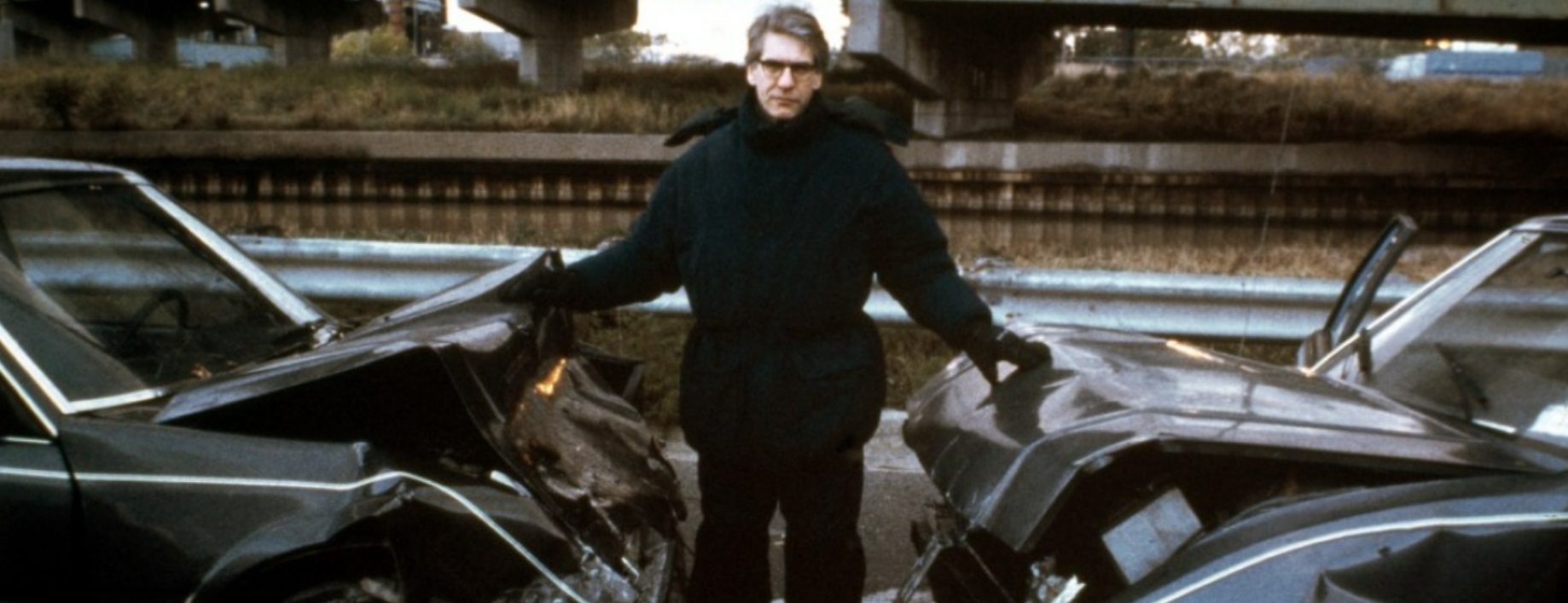
Even if one were to factor in the – until relatively recently – persistent bias against horror from the Academy of Motion Picture Arts & Sciences, Cronenberg spent pretty much the entirety of the first decade of the 21st century putting out mostly successful Serious Dramas™ that should have established his “respectability” among the less adventurous members of the AMPAS Establishment. Put your hands down, fans, I know what you are about to say in protest and I promise you I’m getting to that. Just… stick with me on this.
As I was saying, the machine-like precision of A History of Violence’s scene-level construction and folding its characters’ shifting psychologies into the escalating stakes were more comprehensive a demonstration of directorial vision than most of the 78th Best Director nominees. No ostentatious display of raw bison liver-eating or gritted teeth in ice-cold rivers that Alejandro G. Iñárritu put Leonardo DiCaprio through in The Revenant felt anywhere near as viscerally brutal to watch as that scene from Eastern Promises. A Dangerous Method isn’t without its flaws, but as far as adaptations of popular plays go, Cronenberg overall managed the transition from stage to screen more effectively than, say, Ron Howard did with Frost/Nixon.
And yet, the Academy ignored him in favor of those other guys. It’s no surprise to me that he returned to the sanguinary milieu that vaulted him to the S-tier of the horror genre after that last movie didn’t make much of a splash, even as those subsequent films all suffered from what I felt was a lack of… energy, compared to his output from the first thirty years of his filmmaking career. Almost as if he feels an obligation to “play the hits” in the twilight of his career when what he really wants to do is continue to go to different frontiers as an artist. And sure, maybe receive a little recognition in his old age, too! Genuinely no shame in that, and he has earned the right to express a desire for recognition at this point.

But take out the “well, it was a different time so it’s not like they were ever going to give anyone so closely associated with horror a chance” handicap? It’s even more galling to consider. Think about how much they otherwise claim to be such fans of an “actor’s director.” Oh, really? Then why the blind eye to the filmmaker responsible for the most wholly successful leading roles of James Woods and Christopher Walken’s entire careers, the best performance of Jeff Goldblum’s career, and one of the best performances delivered by a man in all of the 1980s?
That last one was too good for even them to pretend wasn’t an egregious snub, and Jeremy Irons knew it when he managed to win Best Lead Actor only two years later for a movie that would have never been available to him had he not taken the role in Dead Ringers that over a dozen other actors turned down before him. It’s a brief, but very clear acknowledgement in his acceptance speech:
Oh, we understand. We absolutely understand. Actors usually don’t have a full idea of what the final cut of the movie is supposed to be, but a director does, which is why one of the most important jobs of a director is coaching their actors into not only giving strong performances, but ones that “fit” with the rest of the production. Cronenberg has demonstrated this ability above and beyond most filmmakers of his generation. He has staked out an aesthetic identity as instantly-recognizable as the Coen Brothers or Wes Anderson, and thoroughly refuted any accusations that he had nothing going on outside of those signatures back when George W. Bush was still President of the United States. A lifetime of significant, lasting achievements in horror, screen acting, and cinema in general.
So stop dawdling, Academy! I have no idea if his latest semi-self-portrait is going to break through with you (or if it’s any good), but at a minimum, the man has more than earned an honorary lifetime achievement award from your organization! This urgency is not just ginned-up internet drama energy, either; as he gently noted at the event, there is not much time left to recognize him.
Again, from the Variety report:
Cronenberg, attending TIFF for the North American premiere of his film The Shrouds, which debuted at Cannes, reminded the audience (with a smile), that he’s getting old: “I’m exactly the same age as Joe Biden.”

The same age. As Joe Biden. Who received his own “lifetime achievement” tributes not even two whole months ago. If that’s not a sign that the comparably elder horror icon is deserving of a formal public accolade at the next Academy Governors Awards ceremony, what other indicator could they possibly be waiting on at this point?


Comments
Loading…