
 Cory Stillman
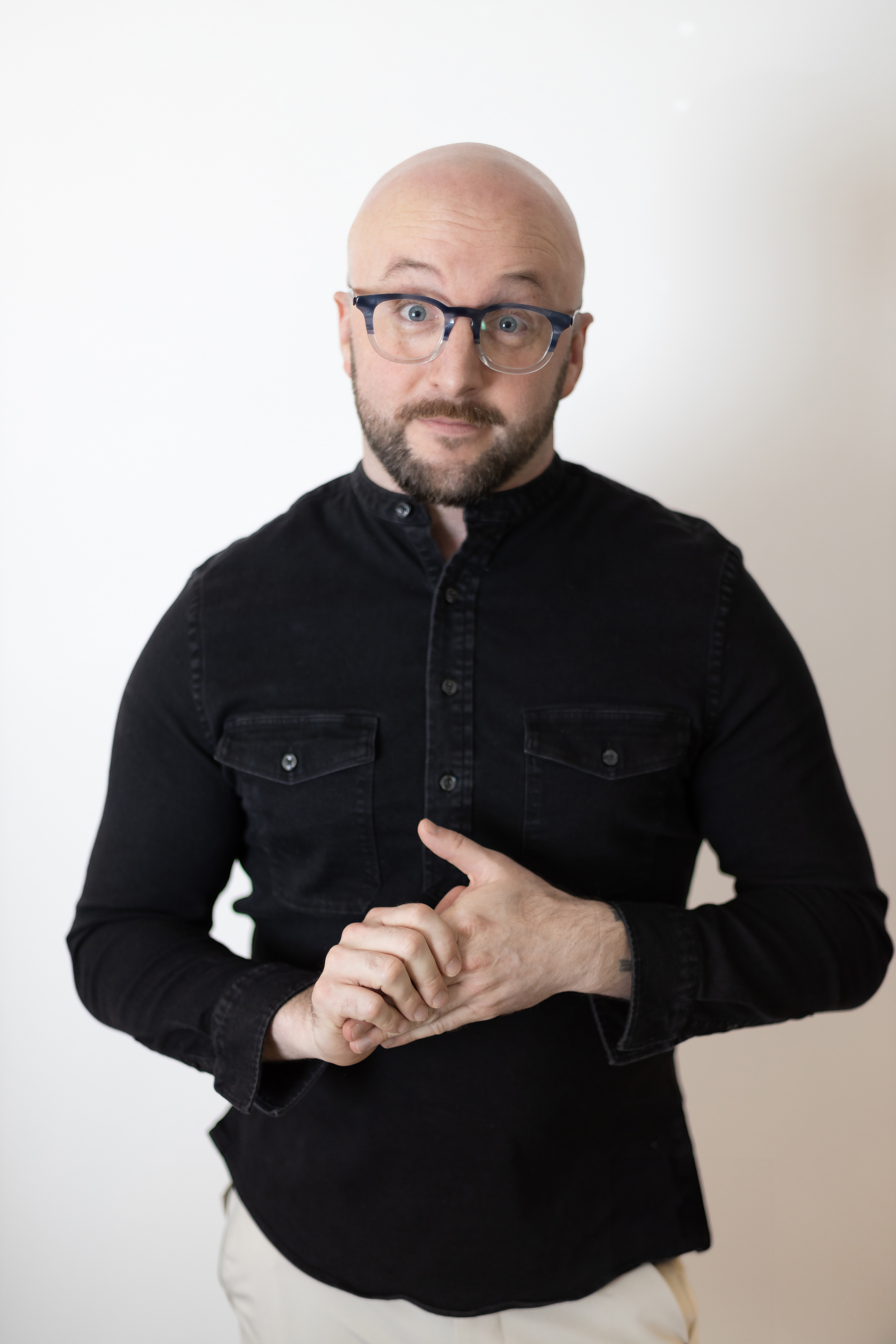
Michael Anthony Brown and Michael Oliver are two of the most renowned picture editors in sports. Brown and his co-editors won the Emmy in 2023 for his work on the first season of FX’s Welcome to Wrexham, so it is no surprise that the addition of Oliver – a five-time Sports Emmy winner – led to another Emmy nomination for the Wrexham team.
“For me, season 2 was really the part-two finale of season 1,” says Brown. “A continuation of the journey and mission to elevate the ‘town’ to ‘city’ and close the fifteen-year drought chapter for the club and the spirit of Wrexham and begin to set out on a new path in season 3.”
Indeed, the narrative flow of Welcome to Wrexham is seamless across its first two seasons, pairing the expected drama of any sports programming with a proprietary blend of humor and heart. With the involvement of Ryan Reynolds and Rob McElhenney, comedy is in no short supply. But as Brown points out, some of the show’s funniest moments come from unexpected places.
“I’d argue that it is the love and passion for life that offers more of an endearing sense of joy. The laughter is natural and infectious in the raw scenes,” says Brown.
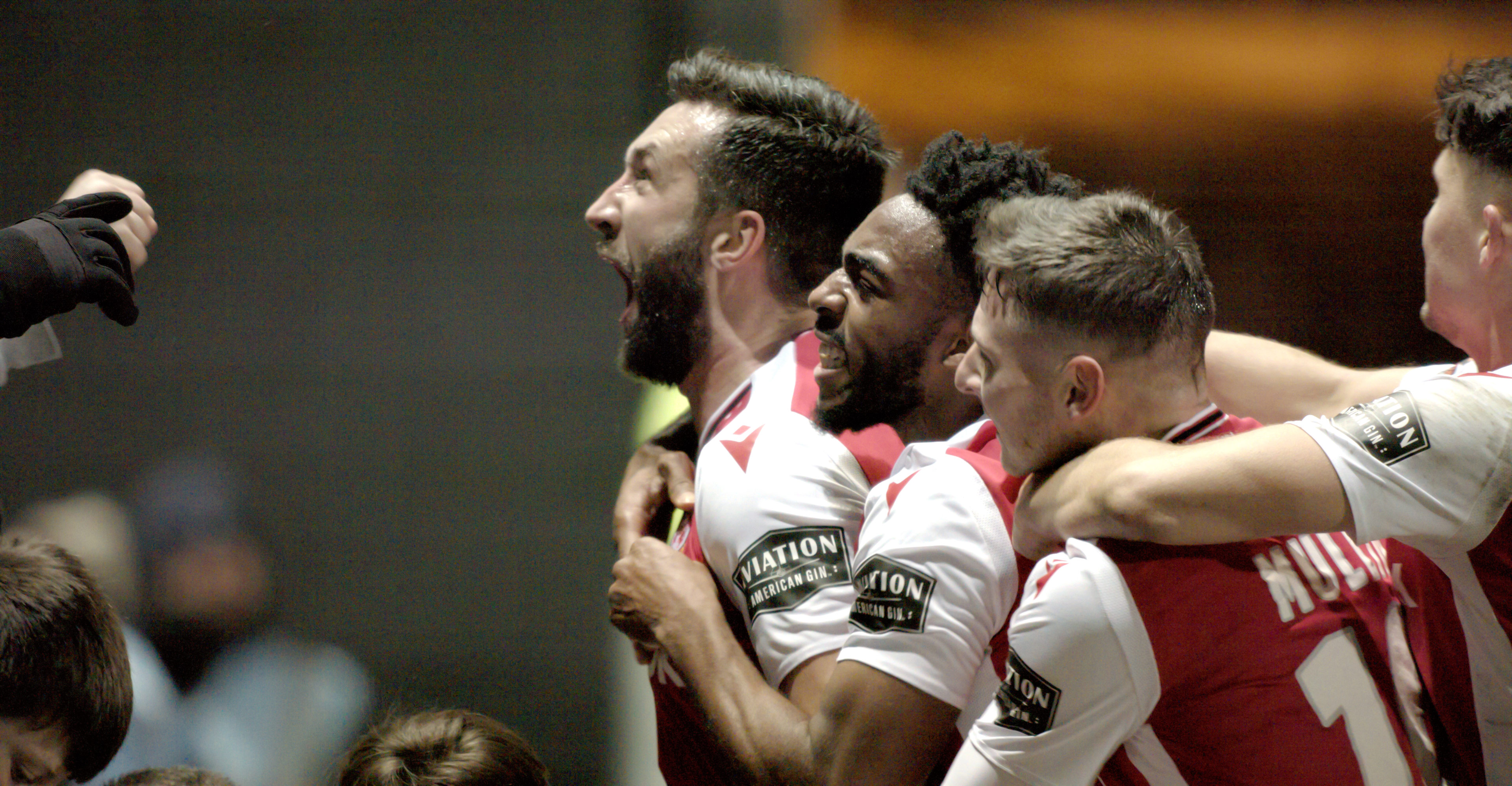
Of course, the nominated episode – season 2 finale “Up The Town?” – marks Wrexham at its most heartfelt and thrilling, capturing that unbelievable moment when the town of Wrexham could finally rejoice in their hometown team’s long-awaited elevation to the English Football League.
A passionate soccer fan himself, Oliver was just as elated to see those scenes come together from the editing bay.
“From Rob McElhenney and Ryan Reynolds’ big embrace with each other, to all the local fans and town people storming the pitch with the biggest smiles and happy tears you’ve ever seen,” Oliver says. “You could really see how much it meant to everyone and for how long everyone was waiting for this moment to happen.”
Check out our full conversation with the Welcome to Wrexham editors below. We discuss their favorite moments from the show, as well as some of their respective career’s most fascinating credits.
Hey guys! Could you each talk a little bit about your creative backgrounds and how you got involved with Welcome to Wrexham?
MAB: I spent a lot of time in the film production section of Barnes and Noble in my hometown of Springfield, Missouri when I was in middle and high school. Coming up during the exponential growth of digital filmmaking I was fascinated by what was happening in the industry and taught myself Avid, Premiere, After Effects, and moved to LA after graduating high school in 2003.
I became an assistant editor and transitioned shortly after into sports television, cutting player features for the television poker frenzy of the mid ‘00’s. The focus I fell into was short stories across all broadcast networks, compacting life stories and personal struggles into 2-3 minute packages. I then expanded into single one or two-hour special sports programming, highlighting a journey to a particular event, and then into series work that involved sports of some kind — the kind of drama and excitement that was driven by the edit and sequences that required a certain dynamism and creativity that happened in the bay.
One of the producers whom I had worked with for years back to my earliest edits and most recently on Netflix’s Losers, Adam Goldberg recommended me to the showrunner of Welcome to Wrexham‘s first season, Jon Henion, and I was able to hop into an open edit seat to help develop that first season and the rest is history.
MO: I first got introduced to the editing/production world while I attended St.Cloud State University in Minnesota. I was in charge of a Div 1 hockey broadcast that competed against the regional FOX Sports North on some broadcast. I would work on the hockey broadcast on Friday and Saturdays, and then early Sunday morning I would drive an hour to work for the national FOX Sports for the Vikings broadcast. Once I graduated from St.Cloud State University, FOX Sports hired me almost immediately and I moved out to Los Angeles in 2005. I worked for FOX Sports as a Producer for 3 years. I made my decision to go freelance after FOX Sports and worked as a producer and Editor for multiple docuseries that aired on major networks including HBO Sports, ESPN, NBC, BET, Red Bull, Spike and still working for FOX Sports as an Editor on all the major sporting events including The Super bowl, World Series and all the Men’s and Women’s FIFA World Cups. As far as joining Welcome To Wrexham, they actually reached out to a friend of mine for any referrals to join the show, and my friend told them all about me, and with that referral they reached out to me and interviewed me. What they didn’t expect was that I have been friends with and worked with an established Welcome To Wrexham editor, Michael Anthony Brown, since 2009. So with the referral and Michael Anthony Brown’s approval, I was hired almost immediately, and felt like the luckiest person on earth because Welcome To Wrexham was my dream job at that point.
You and your editing team are Emmy-nominated for your work on the season two finale “Up The Town?” — what were each of your favorite moments from that final episode?
MAB: For me it was the excitement of the town in the sequences both before and after they secured the moment that would end 15 years of heartache and loss. The energy before the match was palpable, emotional and raw. People were crying before the match, during and throughout the last several minutes they needed to hold on to claim victory and a promotion. This episode that caps off, for Rob and Ryan, a nearly three-year investment of time away from family, and deep spending and gambling on this town, was all at a head in those final moments, and to celebrate with a parade through Wrexham for the ages is just incredible to have the opportunity and responsibility to tell this story to the world.
MO: My personal favorite was just watching everyone’s reaction once the team secured promotion. From Rob McElhenney and Ryan Reynolds’ big embrace with each other, to all the local fans and town people storming the pitch with the biggest smiles and happy tears you’ve ever seen. You could really see how much it meant to everyone and for how long everyone was waiting for this moment to happen. It was truly the best way to wrap up not just season 2 but season 1 as well.
Mike — how does Wrexham compare to your work on more traditional sports documentaries and broadcasts, including your Emmy-winning work on the 2022 Winter Olympics?
MO: It’s a huge difference! With all the other docuseries and the Winter Olympics, it’s more of a one and done kind of story telling just because the sports world usually just focuses on one big event, not multiple seasons of one team. With Welcome To Wrexham we get to tell stories and a lot of times we get to tell the followup stories which most of the time are even more compelling. It also comes with a lot of challenges though as well, like how can you evolve a story on the same character multiple times while keeping the audience still interested. You really have to reach deep into your inner creativity to keep these stories going with the same impact as the first one. For me though, I love a challenge, and a challenge only makes you better at your craft.
Michael — I understand you worked on Werner Herzog’s Grizzly Man as an editorial assistant early in your career. How did that experience shape your understanding of editing and storytelling?
MAB: My first job ever in the industry at 19, I came into being the night assistant for Creative Differences, who among other shows was hosting the edit for Grizzly Man. I was just outputting and making tape dubs and consolidations for mix etc,, but being able to see the edit change in its last stages of locking the process of documentary filmmaking and how important the small but remarkable emotional change trims and additions can make really made me fall in love with this kind of storytelling. One Saturday I had the pleasure of looking for specific shots of cubs in a little creek, at the direction of Mr. Werner Herzog himself. It probably was my first starstruck moment in Hollywood.
The success of Deadpool and Wolverine has reminded audiences of Ryan Reynolds’ distinctively irreverent style of comedy, but Ryan and Rob’s sense of humor can be found all throughout Welcome to Wrexham as well. As editors, how do you incorporate comedy into real-life storytelling?
MAB: You can throw a dart at the scenes with Rob and Ryan where you will land in comedy; it just oozes out of their everyday communication. But with the rest of the town, there’s a natural offbeat comedic sense that comes across in the people almost as effortlessly. But I’d argue that it is the love and passion for life that offers more of an endearing sense of joy. The laughter is natural and infectious in the raw scenes. Though, we really used Humphrey Ker a lot to elevate some of the more dry – but equally important – parts of the documentary; the who, why and what is happening part of explaining a sport to a foreign audience, was a role that Humphrey always would bring his talents to elevate and make humorous.
MO: Just like in life, there is a time and place for comedy and there is a time and place when comedy doesn’t work. Luckily for us, we have two of the best comedic geniuses/people in Rob McElhenney and Ryan Reynolds. It comes second nature to them when to input comedy into their scenes/interviews. You get a front row seat in Welcome To Wrexham to see exactly who these two are in real life. They are both just so funny but also very personable guys.
Michael — you previously won an Emmy for your work on the first season of Welcome to Wrexham. How have you seen the show evolve across its first couple seasons?
MAB: We knew we had something special from the earliest daily footage that was dropping into the Avids. It was a labor of love from the top down to really develop and keep striving to find the sweet spot as I mentioned before about humor, passion, the seriousness of real-life struggles and the sport of it all at the same time. For me, season 2 was really the part-two finale of season 1, a continuation of the journey and mission to elevate the ‘town’ to ‘city’ and close the fifteen-year drought chapter for the club and the spirit of Wrexham and begin to set out on a new path in season 3. It’s easy to maintain the heart of a town who so readily dangles it for all the world to see, and the openness of the Welsh people to share stories is something that I haven’t ever experienced on another project in my career. I’m very lucky for that.
Mike — sports documentaries like Wrexham are becoming increasingly popular, as Netflix continues to find success with similar shows like Drive to Survive and Break Point. As a big sports fan yourself, are there any specific teams or sports you would love to see profiled in their own show?
MO: I would LOVE if the sport of RUGBY would get featured more prominently. I was introduced to it on my honeymoon of all places, while my wife and I were in Singapore. The World Cup of Rugby was going on at the time. I have never seen a sport where you see multiple bloody faces, broken bones, people running full speed with and getting drilled by a player that is built like Arnold Schwarzenegger in his prime bodybuilding days, all while having no pads or gear to protect themselves. If a player gets injured and the training crew comes out to treat them, the game still goes on around them. I mean this sport has the toughest people on earth playing it. They really do make the NFL players look like whiners. You really have to be in the best physical shape to play this sport. Also all the nations and the teams have the most compelling and unbelievable stories that need to be told. It just needs the right type of show to capture the United States audience like it has the rest of the world. Maybe I should convince Rob and Ryan to purchase a Rugby team next!
Has working on Welcome to Wrexham changed your relationship to soccer at all? Do you follow the English Football League or any of the other high-profile international leagues?
MAB: I hadn’t really followed the EPL prior to this, and certainly not non-league football. I was more of a champions league, big stadium, big Europe fan in following Barcelona during the Messi years. But I will be a Wrexham fan for life. The league just started up again this week and I was right there early on Saturday Morning cheering up the town!
MO: I was and still am pretty knowledgeable about the sport and most of the big time leagues, especially the Premier League, as I was embedded with the Liverpool Squad before for work and played the sport all my life, but Welcome to Wrexham introduced me to the lower pyramid divisions that I never knew existed. It really blew my mind how many different divisions there are. Just shows you how big the sport really is in England. In fact, I had to edit the story on one of Wrexham’s competitors, the DORKING Wanderers, and fell in love with their team so much that I invested in the team and now am a minor owner of it! It’s actually the second team I invested in and became a minor owner of. My first team is actually from my home state of Minnesota, the Minnesota Aurora – a women’s professional team who hopefully will be joining the NWSL in the United states real soon. Rob and Ryan are definitely rubbing off on me, but I truly do love the sport.
Both seasons of Welcome to Wrexham are now streaming on Hulu.



Comments
Loading…