

 Shane Slater
In 2016, a Tunisian woman named Olfa Hamrouni endured a living nightmare when her two eldest daughters became radicalized by the infamous Muslim extremists ISIS and disappeared. Years later, Olfa revisits the painful memories to tell the story of her family in Kaouther Ben Hania’s deeply moving documentary Four Daughters. Using professional actors to portray her departed daughters, Ben Hania’s creative approach makes for an incredibly empathetic look at a family who were shunned by their society. With the film now being shortlisted for potential Oscar nominations for Best Documentary Feature and Best International Feature, it was therefore an honor to chat with Ben Hania about the making of the film and the extended sisterhood it created.
Shane Slater: These are obviously very painful memories for Olfa. What were those initial conversations like with her when you proposed the idea of this film?
Kaouther Ben Hania: I saw her on TV. She was talking about the story of her daughters. And when I contacted her, she thought that I was a journalist. She told me, “I’m done with journalists.” Because she was insulted on social media. People said she and her daughters are monsters. So the first discussion was me explaining to her that I’m not a journalist. And that I want to do a movie and in order to do this movie, she would have to meet me. We have to get to know each other and then decide if she’s open. So then I started being in their life all the time because as I told you, Olfa and her daughters were persona non grata because of what happened to their sisters. So I was mainly the only person who was not judgmental. So we became very close and this adventure I started in 2016. And I was lost on the way, thinking I can do this movie, but with a lot of doubts. I did another movie The Man Who Sold His Skin and then when I came back, we finally shot the movie in 2021.
SS: How did you arrive at the decision to include professional actors?
KBH: As I told you, I was lost on the way thinking that I can do kind of a verite documentary or something like that. But what I filmed wasn’t good enough and it wasn’t intense enough. And it doesn’t give justice to the complexity of the story. So at some point, I was thinking that to understand the why of this tragedy, I have to go to their past. And since I don’t have the past to film, there is a well known cliche in documentary which is reenactment. But I don’t like reenactment in documentary. For me, it’s such a cliche. So I thought that maybe I can use this cliche, and hijack it in a way. Turn it into something else that can serve my storytelling, which is this kind of Brechtian theatre where the real characters – Olfa and her daughters – are directing the actors to remember their memory or to play their memory. Where the actors are asking questions and all of them are reflecting on those memories.
SS: When they first meet the actors, they’re so impressed with how they resemble them physically and in their personality. What was that casting process like, especially since they were persona non grata?
KBH: I wasn’t thinking about the physical resemblance. I mean, I thought about it a little bit. For those who didn’t see the movie, there are four daughters, and the two eldest daughters disappeared. So I’m bringing to this family two actors to remember the past and play with the family. So I wasn’t thinking about the resemblance, but the resemblance was there because this was the first thing they noticed. We have this scene where it’s their first time meeting in front of the camera. When I casted the actresses, I was interested in their personality, because it’s also a documentary about them trying to understand this family’s life and trying to interpret it. Their personality, the fact that they are not judgmental, the fact that they are supportive, these were a lot of elements that made me choose those actresses.
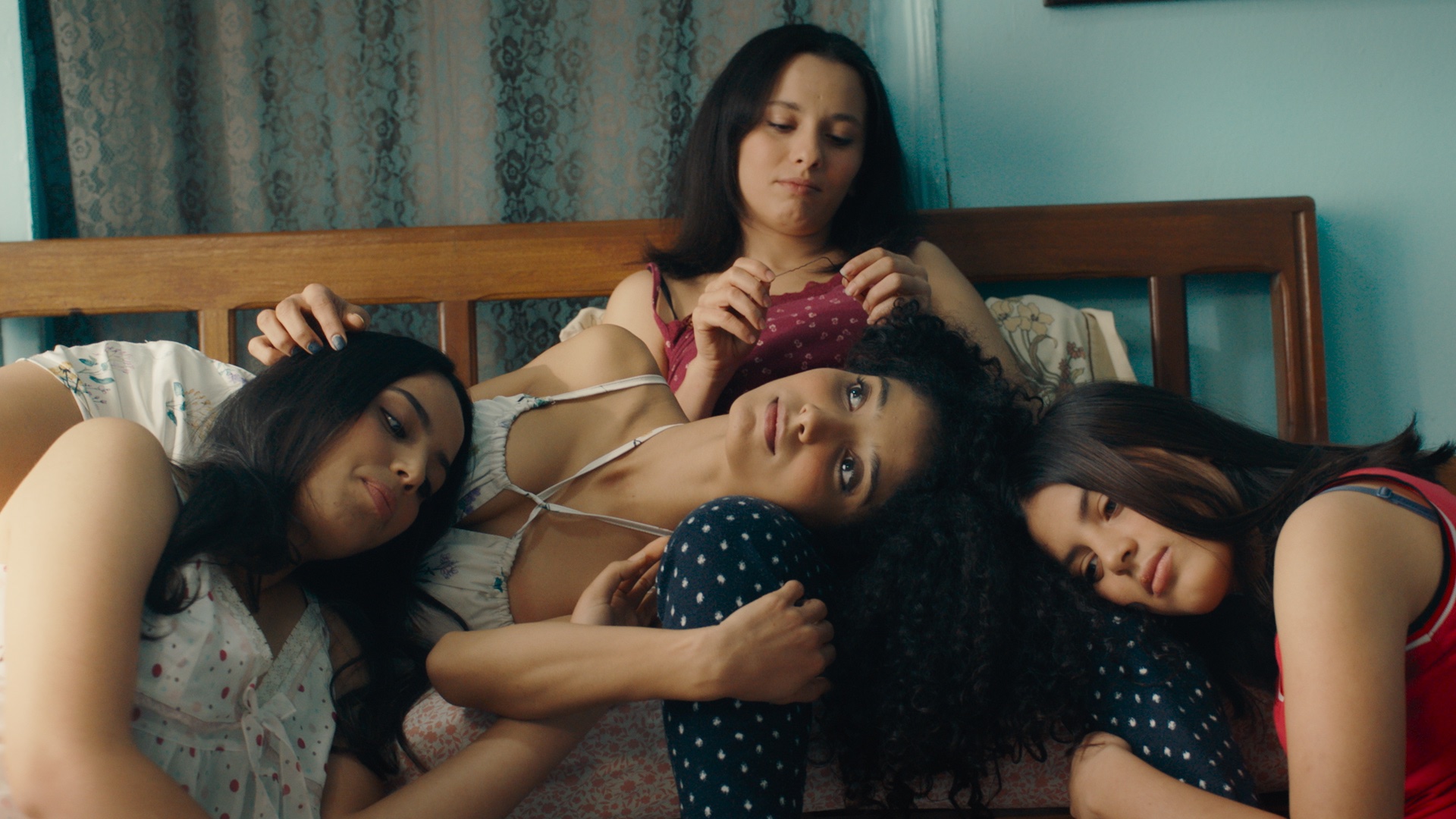
SS: As the movie of the film unfolds, it seems like they really formed a sisterhood of supporting and also challenging each other? Did it turn out how you expected?
KBH: What I love in documentary is that I’m the first audience of my movie. So I’m surprised all the time. Sometimes you think that you will have a kind of scene, but things doesn’t happen as you think. So I’m always challenged by the richness of the reality and the authenticity of people and their genuine reactions.
SS: It was quite interesting that the hijab was almost frowned upon in Tunisia before the revolution. Could you touch on that a bit, especially since Olfa hates it, but encourages her daughters to wear it.
KBH: We live in societies where what women wear, still has so much political meaning to it. Which is crazy, you know? All those men thinking about what women should wear, and how they can be sexy. So here we are talking about the hijab, which is a way to hide your body, but it’s available for all other types of women. The discussion is always passionate about what women wear, should not wear, what we should forbid and what we should accept. So it has become something very political, women’s bodies.
Four Daughters is now playing select theaters.


Comments
Loading…