
 Maxance Vincent
I’ll admit not being the biggest fan of German filmmaker Christian Petzold, but it’s always good to periodically check in with filmmakers you’re not necessarily fond of to see if their latest movie will surprise you. This was the case with Miroirs No. 3, a thematically intriguing and often funny character study that slowly leads the audience towards unexpected territories. It starts on extremely familiar ground, immediately shakes up the foundation with a massive inciting incident, and culminates in a light entirely different from what you imagine.
Even if the ultimate reveal threatens to tarnish the entire movie, because Petzold strangely handles it with the subtlety of a sledgehammer, one can’t entirely dismiss what comes before and after this specific moment. It begins with a banal, quotidian situation. Piano Player Laura (Paula Beer) and her boyfriend Jakob (Philip Froissant) travel with business partners to a weekend getaway. Laura feels ill and asks her partner to return home, but the two argue in the car and crash. Jakob is immediately killed, but Laura miraculously survives, with no apparent injuries.
Laura is taken in by Betty (Barbara Auer), who immediately cares for her and calls the ambulance. The paramedics think everything is fine, but want to take her to the hospital to confirm. Laura wants to stay with Betty, still traumatized by her boyfriend’s death and feeling deep remorse for having caused the accident. Betty acquiesces. What unfolds next, I shan’t dare spoil, but Petzold begins to examine two deeply flawed characters who, in a way, complete each other. Laura gives Betty meaning again, which she’s been missing for quite some time. Betty gives Laura a sense of comfort, purpose, and stability, something that’s crucial for anyone riddled with extreme trauma.
Things also begin to improve in Betty’s relationship with her husband, Richard (Matthias Brandt), and son, Max (Enno Trebs), but one doesn’t know what initially caused the fracture. You’ll quickly find out, and it might be where you’ll either love Miroirs No. 3 or have some reservations with how Petzold frames this story. Truth be told, this reveal would’ve probably worked better if the filmmaker had allowed the audience to sit with the protagonists a tad longer than quickly jumping from one scene to the next, even if his patient style recalls the absorbing work of slow cinema.
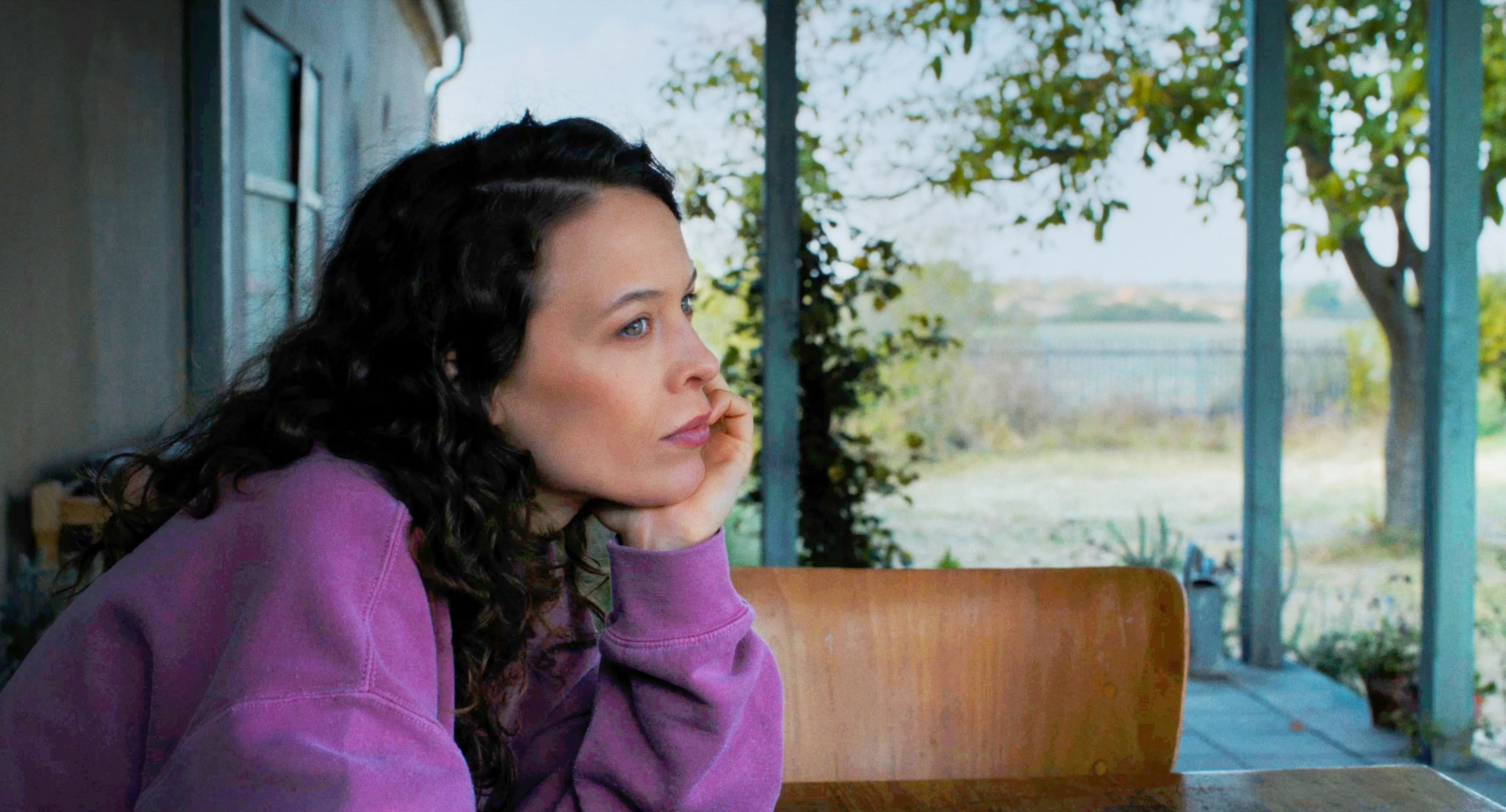
There’s an unspoken elephant in the room between the family members that fills the air. We can feel it on our shoulders, pressing extremely hard, as if it’s a burden. At first, it creates a disquieting sense of tension that can often be funny (mordantly so), until we realize what this exactly is. It opens the film up and creates some coherent sense in the characters’ interactions, though it’s less subtle than its patient frames and tangible, almost suffocating atmosphere. One specific scene that demonstrates the film’s power employs a Frankie Valli song to disturbing effect, and all Petzold does is cut between the piercing looks of Max and Laura, as they both realize something they shouldn’t.
It’s a strong (early) contender for “scene of the year.” With zero words and no particular visual flourish, Petzold achieves pure cinema by simply making the audience witnesses to the protagonists’ unspoken exchanges through Valli’s words. The song eventually repeats during the end credits (there’s also a post-credits scene – I’m not joking), and takes on a very different meaning than when the audience first hears it, when it patiently examines Laura and Max’s gazes.
Paula Beer also gives a performance worthy of a great actor. There isn’t a false note here, in a turn that takes immense control and restraint to pull off so spectacularly. Again, most of Miroirs No. 3 lies in Laura and Betty’s repressed emotions. One is riddled with guilt and trauma. The other wants to feel loved again. They don’t complete each other, but the mutual respect they give to one another during the film’s sobering final scene is enough to ensure they will live their lives in hope that things will undoubtedly get better.
If it doesn’t, what is life worth living for?
SCORE: ★★★


Comments
Loading…