

 Maxance Vincent
After closely collaborating with Sean Baker, either behind or in front of the camera for over twenty years, Taiwanese film producer, actress, and filmmaker Shih-Ching Tsou makes her solo directorial debut with Left-Handed Girl. This isn’t her first foray behind the camera, as she co–helmed 2004’s Take Out with Baker, but Left-Handed Girl marks the first step for Tsou’s mark as an artist who shares the same humanist qualities as the Oscar-winning director, but with a greater emphasis on the relationship forged between the characters than the story directly responding to them.
When Tsou and Baker (who co-wrote and edited the film) attempt to interlink each story its three protagonists live through, Left-Handed Girl falls apart. What comes before this sequence feels so electric in capturing the routine lives of mother Shu-Fen (Janel Tsai) and her daughters, I-Ann (Ma Shih-yuan) and I-Jinn (Nina Yeh), that one doesn’t necessarily need a story to coherently link all of their individual paths inside a drawn-out banquet scene with enough explosive reveals that transform its textured emotions into soap opera-like theatrics.
That said, one can’t deny how major the movie feels beforehand, a bold artistic statement that assuredly introduces Shih Ching-Tsou as a voice to watch, especially in the realm of observational cinema, where the camera allows the audience to form a connection with the protagonists without the filmmaker necessarily inferring one way or another. It presents the three women as they are, flawed and vulnerable, while also highlighting their deepest, most human qualities, and lets the audience come up with their own conclusions and feelings towards them.
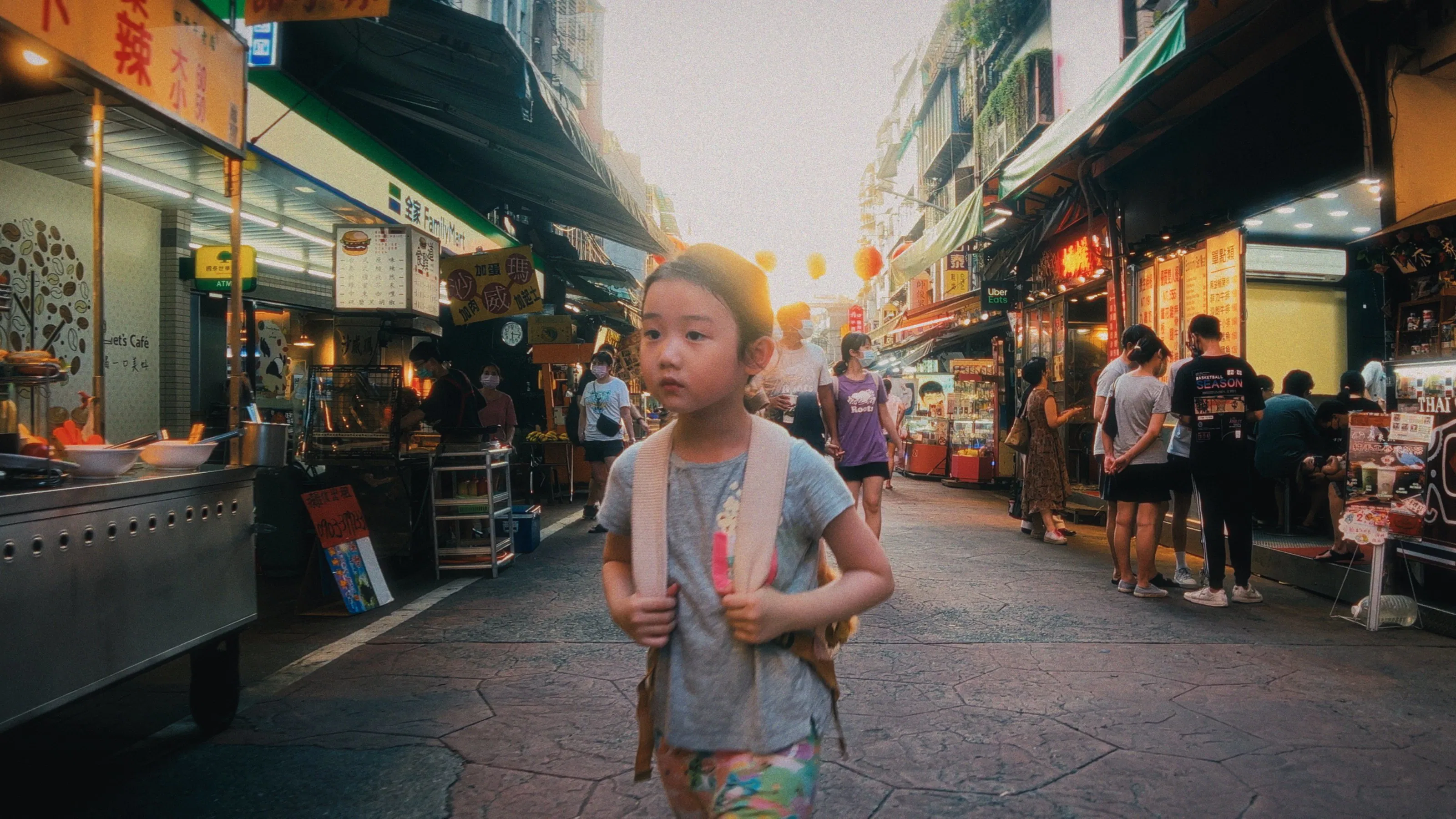
This is done through impeccable, note-perfect performances from its three leads, yes, but mainly in how Tsou and cinematographers Ko-Chin Cheng and Tzu-Hao Kao always capture the protagonists at their level, through a jaw-dropping, immersive use of iPhones. When it follows I-Jinn careening around the streets of the Taipei Night Market, at her height, as we get to experience her perspective filled with joy, wonder, and curiosity about a world she doesn’t yet understand, or is at least trying to, the movie opens itself up so naturally that it doesn’t really need a “narrative” to carry its emotions.
Of course, the fact that they are siblings and live in the same household will draw parallels to how each age group (youth, adolescence, and adulthood) sees the world, but each has its own individual stories worth observing at its simplest level. The iPhone cinematography isn’t groundbreaking, but it’s certainly effective at putting us in the shoes of each character, as their stories follow the same throughlines that Baker loves to highlight in his own films. There’s one particular image, shot from the perspective of the ailing father whom I-Ann has essentially disowned, that encapsulates a litany of feelings she has boiling inside of her, which could genuinely take your breath away.
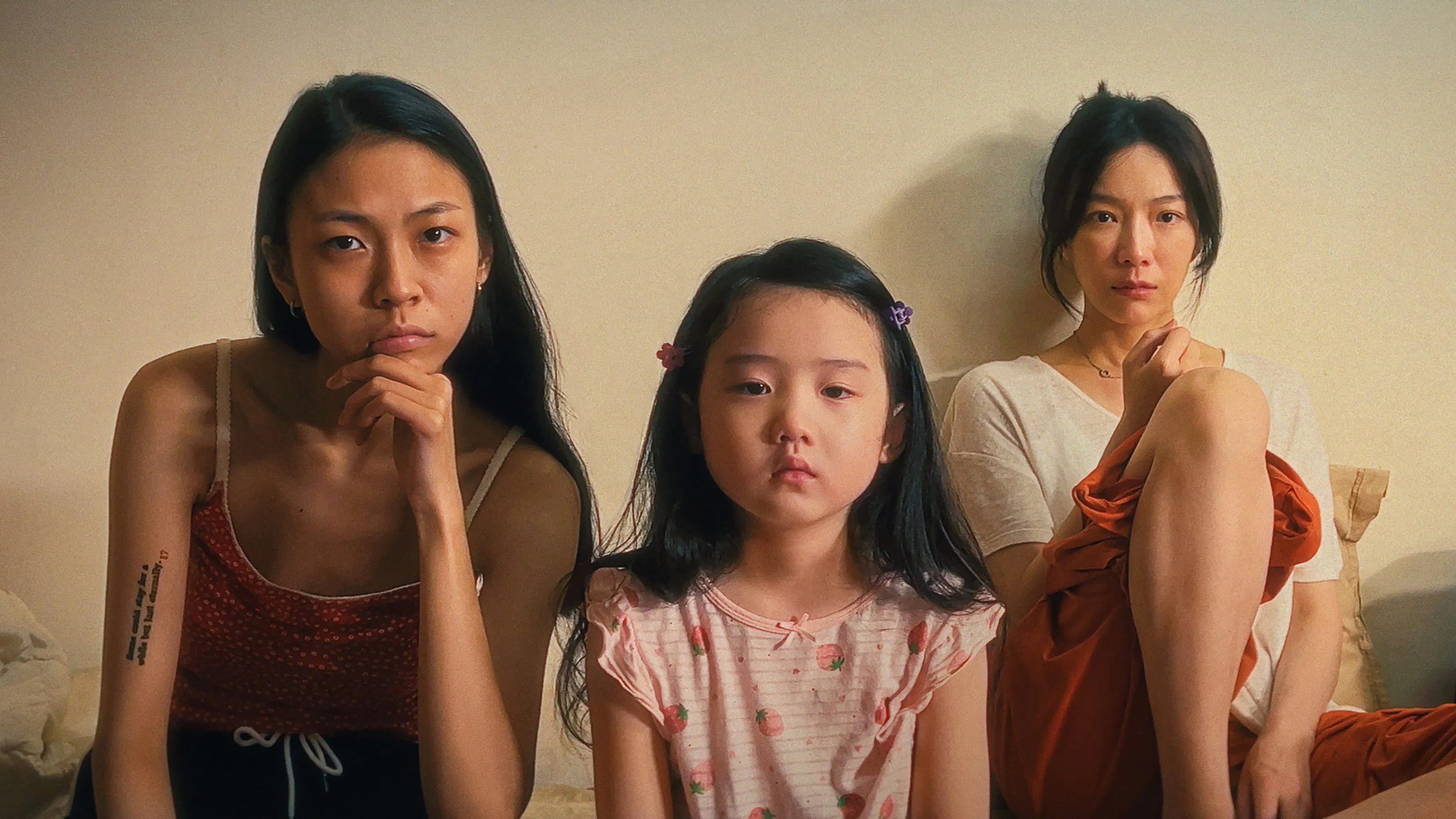
Traditional filmmaking wouldn’t convey the same authenticity as Tsou’s iPhone-photographed images do here. The colors are purposefully heightened at night, and the blurry digital grain a phone’s camera carries makes each frame feel as if they hold enough emotional truth for the audience to latch onto the characters and their individual – and often collective – plights. There’s a real sense of play in how both cinematographers use their central device, making us experience the Taiwan cityscape as a place we can touch, smell, and feel every ounce of its often claustrophobic, but occasionally beautiful, environment. It’s through this digitized language that we ultimately form a connection between the characters, only to have them break our hearts in a million pieces near its final section.
Baker’s editing also creates a form of poetry between the three storylines, as it finds interlinked themes while Tsou observes them in their routine lives, through I-Ann and Shu-Fen’s nightly employment, or even I-Jinn forming a connection with a meerkat named GooGoo. The animal’s innocence is perfectly represented as a figure who wades through the chaos of a world he – and I-Jinn – have difficulty navigating in. I-Jinn is constantly chided by her grandfather (Akio Chen) for using her left hand, which she takes literally as “the devil hand,” causing more chaos in a life that doesn’t need more, especially given how Shu-Fen’s relationship with her parents – and siblings – has fractured even further after having moved to Taipei.
The way Baker cuts between the three is always in communication with the grander picture at play, figures who perceive the world differently but are united in how they, no matter their age and subjective experiences, still have much to learn (and still won’t be able to learn everything there is to know about life when it ultimately ends) in their respective paths. Again, Tsou doesn’t judge them. She simply lets their views of the world speak for themselves and hopes they will resonate with viewers, whether young or old.
In that case, the performances are simply extraordinary, with young Nina Ye giving the year’s best child turn, by a country mile. How she expresses I-Jinn’s sense of wonder and awe in exploring a place she’s unfamiliar with and trying to make sense of things that adults are trying to shut her away from is genuinely remarkable, even more so from a nine-year-old child.
Her sense of comedic timing is pitch-perfect, and, in some of the film’s more dramatic sections, it won’t take long for you to shed a few tears as I-Jinn’s eyes always try to examine the layers of shielding her mother and sister attempt to do. You don’t want them to speak white lies to the child, but when she takes the “devil hand” mantra in the most literal sense of the term, one easily understands the complexities of Shu-Fen trying, as much as she can, for her child to live a carefree existence before the harsh reality of the world is known to her.
That’s why it feels particularly baffling that the conclusion tries to haphazardly link each storyline in a drawn-out banquet setpiece that removes much of the emotional connections the audience has formed in favor of twists that don’t add much to the narrative but hamper some of the movie’s strongest sections. That said, it’s not a significant stain on an otherwise profoundly affecting and visually soul-shocking humanist tale that feels very much in line with what audiences know and love from Baker, but feels like the first step for Shih Ching-Tsou to carve her own path as a singular talent.
Left-Handed Girl is as funny as it is deeply heartfelt, showcasing the complexities of life in ways that feel fresh and exciting, especially given the current digitized era we’re living in. Who knew that shooting an iPhone would make a film feel so alive and genuinely exciting? Baker certainly took that first step with Tangerine, but it was Tsou who perfected his techniques that must be witnessed on the biggest possible screen, and preferably not on a television.
SCORE: ★★★1/2


[…] Maxance Vincent @ Awards Radar […]