

 Steven Prusakowski
Each season of FX’s anthology series Fargo functions as a standalone story but shares common elements: masterful storytelling, complex characters, a nuanced exploration of morality, unforgettably tens situations, and a distinctive visual style. This visual style is especially evident in the work of Emmy-nominated cinematographer Dana Gonzales. His collaboration with Noah Hawley and other key creatives underscores a commitment to pushing television’s boundaries, ensuring that every frame serves both the story and as a work of art. It probably explains why Gonzales has been nominated for the Emmy for every season of Fargo, winning the award for season three.
The cinematographer/director (Gonzales directed two episodes this season) spoke with Awards Radar about the detailed work put into telling this season’s story of moral ambiguity. During our discussion Gonzales reveals some of the creative decisions made that skillfully craft a visual narrative that aligns seamlessly with the show’s thematic elements. For season five, the art direction drew inspiration from Renaissance art, applying a palette reminiscent of the old masters to give the series a unique, timeless aesthetic that subtly resonates with viewers. This required a commitment to the look from the paint and costumes to the lighting.
The cinematographer’s ability to blend artistic vision with technical precision is a hallmark of his work. For instance, the incredibly suspenseful gas station scene from episode one (The Tragedy of the Commons – the episode for which Gonzales is nominated) stands as a prime example of his craftsmanship, a testament to his skill in creating intense, atmospheric tension. By carefully orchestrating light sources, from neon signs to reflective surfaces, he transforms a seemingly mundane setting into a dynamic battlefield of light and shadow, good and evil.
Below is some highlights from my conversation with Gonzales. For a deeper dive into how he makes Fargo both creatively rich and engaging with its moral complexity, listen to our full discussion (below).

On committing to the look of a scene:
“I think that the gas station (scene was shot) over four days or five days or something. You know, we built it and we controlled it, which is good. Always over all night. And so there’s a lot of cuts and so it’s meticulous and yeah. But again, there’s a commitment to it because as soon as you start kind of like committing to like, what is going to be the sources that kind of illuminate things and how you do that, you, There’s no time in television today, even though we’re even in all filmmaking, but there’s just no time.
Most of the time you’re just committing and you’re like, ‘God, I hope…’ and then all of a sudden that initial commitment of one shot informs the next 13 of what’s sliding it, how you’re doing it. So there’s, there is a visualization of that and it’s a very storyboarded scene, When we go into those scenes, Noah definitely goes off storyboard and with him directing – Noah directing the, the first episodes are really the best because it’s just in his head.
No single director is going to be able to do what he does, cause he creates the characters and he’s been thinking about it forever. So that starts to inform again, the entire scene of how we light it. I always want to create these organic things that are there. That’s what in the toolbox of what I can use to light the scene. So it’s like, I don’t, that it has to fit in that it has to fit in those coolers going off and on.
It has to fit into the lights that are in the overhead out of the gas station. It has to be one of those elements – even those glow sticks, whatever it is, it has to be one of those elements that creates the light for these scenes. So that’s not relying on just like, well, okay, I can just light it any way I want the key backfill, whatever. That that’s kind of a, such an old thinking.
I think what happens is it puts you in a place, it puts you in a situation. It does inform the next 13, 14 shots. And you shape what you’ve been thrust into in a way. That’s the kind of place I like to work. And I think that’s the kind of place that Noah likes to work. He throws out suggestions sometimes that are just like, ‘Oh, all right, let’s try it.’ And that’s the difference.”
On Fargo‘s classic approach to lighting:
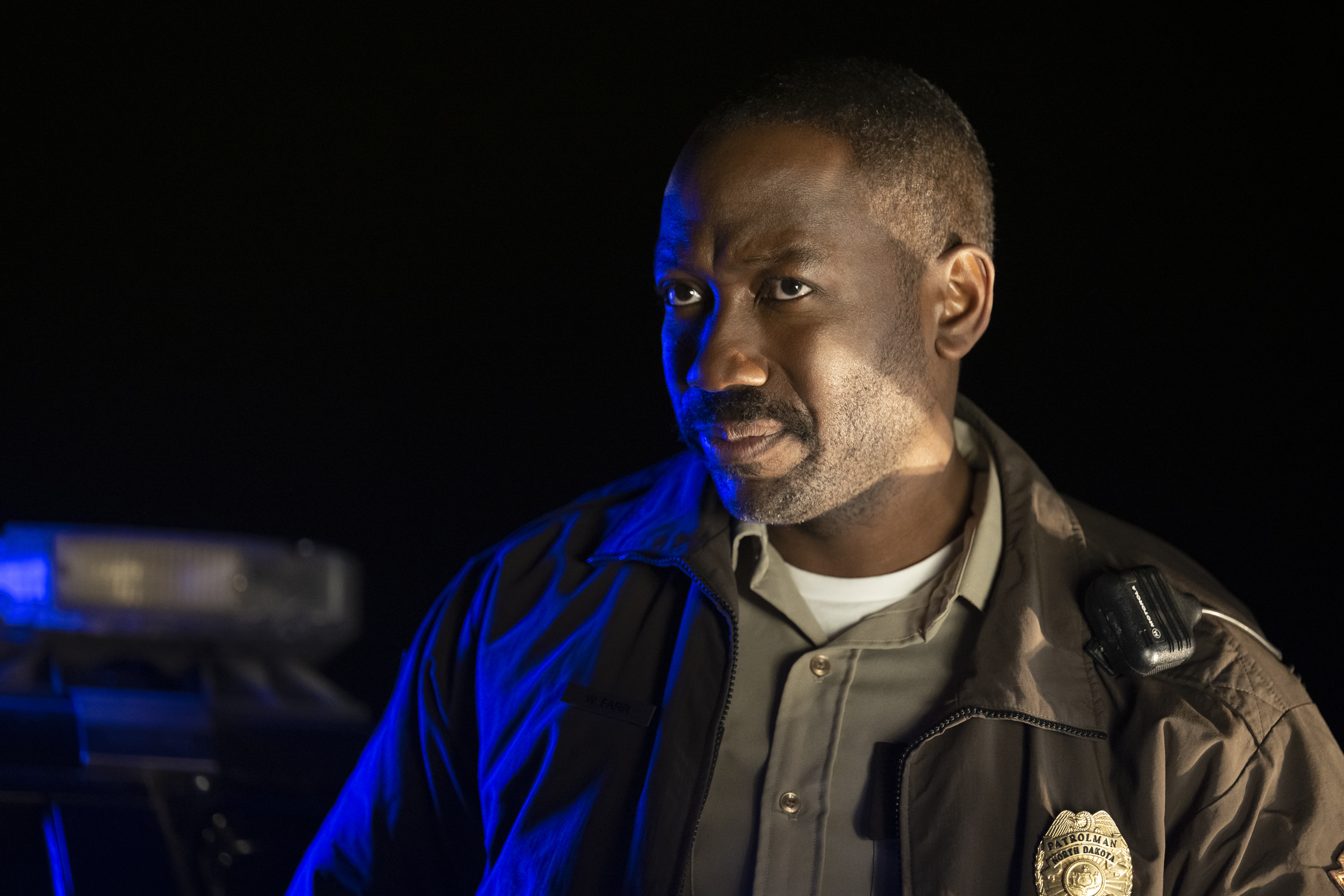
We just don’t do that on Fargo like other shows do. We just don’t do that. We don’t like put lights in the frame and paint them out later. So it’s really kind of trying to rely on what we can do kind of in a more classic way of shooting, especially in television 15 years ago or something. You didn’t talk about VFX like we do now. So we kind of shoot that that way and so I’m really proud of it. I think that it’s they’re really beautiful night exteriors and the lead up in, even into when Witt’s (Lamorne Morris) running into the gas station and there’s like the oasis that he’s running to and the focus of that.
So I think that gas station sequence starts when they’re driving down the road past the gas station, the pullover, the shoot out at the, at the street, went running in, her (referring to Dot played by Juno Temple) running in the gas station, they’ll, until the police lights, the police come and Witt is there. That’s where it starts and ends to me for that scene, you know? All the lead up and thought process and arc of it. I’m very happy that I think that that works beautifully together.


Comments
Loading…