
 Steven Prusakowski
Apple Tv+’s Lessons in Chemistry stars Brie Larson as Elizabeth Zott, an aspiring scientist who faces endless barriers in a male-dominated society. One person always on Elizabeth’s side was Showrunner and Executive Producer Lee Eisenberg who fell in love with the character’s journey and her “indomitable spirit” after reading the Bonnie Garmus novel.
Eisenberg spoke with Awards Radar about working with star Brie Larson to bring this story to our screens, the changes made to the novel, the use of the dog’s perspective, that perfectly toe-tapping theme song and much more. Read my full conversation with Lee Eisenberg below.
Awards Radar: Thanks for taking the time to do this today. How did you get involved in the series?
Lee Eisenberg: Well, the genesis of the series is Michael Costigan at Aggregate found the book at the Frankfurt Book Festival, a year or two even before the book came out, sent it to Brie Larson, who I think read it over the course of a weekend, and that was the beginning of it. And then I ended up reading the book once it had come out, and I just flipped for it and found out that it was at Apple. I’ve had a deal at Apple for five years now, and Michelle Lee, who’s my executive there, we started talking about it, and I just said, I’m obsessed with this, and, you know, if there’s any way to work on this, I would be honored.
And Michelle, who’s just incredible and really has been such an advocate of mine for the entire time, and has really allowed me to do things that are not, you know, I started off my career doing comedies for the first, you know, 15 or so years of it, and then at Apple did Little America, and We Crashed before Lessons in Chemistry. They really allowed me to kind of experiment and kind of step out of the lane that people might expect of me. And I just connected to the material so deeply in a way that I really, I can’t think of another book that moved me the way this did.
I think Bonnie Garmus’s writing is just so beautiful and surprising and funny and tender. And I was a new father. I think at the time that I read the book, I think my daughter was a year old. And so, so many of the stories about parenting and kind of the uncertainty around it were really resonating for me and very much the conversations that I was having at home all the time. And I got on a Zoom with Brie Larson, and we just connected. We really, our sensibilities were very much aligned, our approach to the book and how much we want to honor it, and also the opportunities that we saw to take portions of the book and kind of expand on it in different ways and make it more filmic or take our time with something, with something that was very appealing to us.
And we, it was just kind of one of those things where you hop on with certain people and you connect and others, you kind of like, oh, that was nice. And you kind of go on with your life. And Brie and I, we really just connected and formed a kind of, she’s become a very close friend.
And so it was working on the show and kind of developing it and working at the pace that we did. It was my favorite experience that I’ve had in my career. It was really, it was, it really felt like we built a family on the show.
AR: And was there something about the story or the character specifically that made you want to take it on?
Lee Eisenberg: You know, I thought that Elizabeth, the, she was just kind of this indomitable spirit. You know, she did not suffer fools. I was incredibly compelled by her strength and the way that she stands up to authority and her resilience.
And, you know, she’s equal parts wit and grit, I would say. And having Brie Larson take that on was just like, was the dream of a lifetime for, you know, a writer and producer. And then the love story, I, you know, I remember, I remember the first few interviews that I did, I was like, oh, I can’t say anything about this.
I can’t say anything. Now I feel like, well, if you haven’t seen the show at this point, you know, I don’t know what to say. But it was so surprising to me in the book.
And, you know, it really took my breath away. And I, from as soon as I started working on it, I just, I really kind of saw these, you know, these moments and saying like, okay, at the end of episode two, we’re going to lose Calvin. What, episode three now is the tragedy, you know, is going to be the episode of mourning and loss.
And that’s me from the dog’s perspective. And episode four is the, is really the birth of mad. And every episode to me, Friends would do, all the titles of Friends episodes were, you know, the one where, and that’s the way I kind of think about everything, everything I do when I approach TV episodes is you want the audience to immediately when you say, oh, this is the one where she starts, starts supper at six.
This is the one where, you know, it’s from Calvin’s perspective. This is the one where Calvin dies. This is the one where she does this. That the audience immediately knows what you’re talking about. And kind of looking at the book and pulling out, I really saw a shape very quickly in a way, in a way that, you know, often takes me months. This, this took me, it was much, it was much bad.
It took me, took me months to figure out how to best approach it, but I think kind of the shape of it presented itself quickly.
AR: The moment with Calvin was one that took me by surprise. I was thinking, maybe we’re just going to have a happy ending and then wham! My jaw dropped. My daughters couldn’t believe it. My wife is like, ‘No! There’s no way. He’s going to be alright, right?’ Everyone was in disbelief and it was like such a moment. And then you’re like, where does it go from here?
We were just getting into this love story. We’re just watching these two kind of figure out this life together that we weren’t even sure if they could.
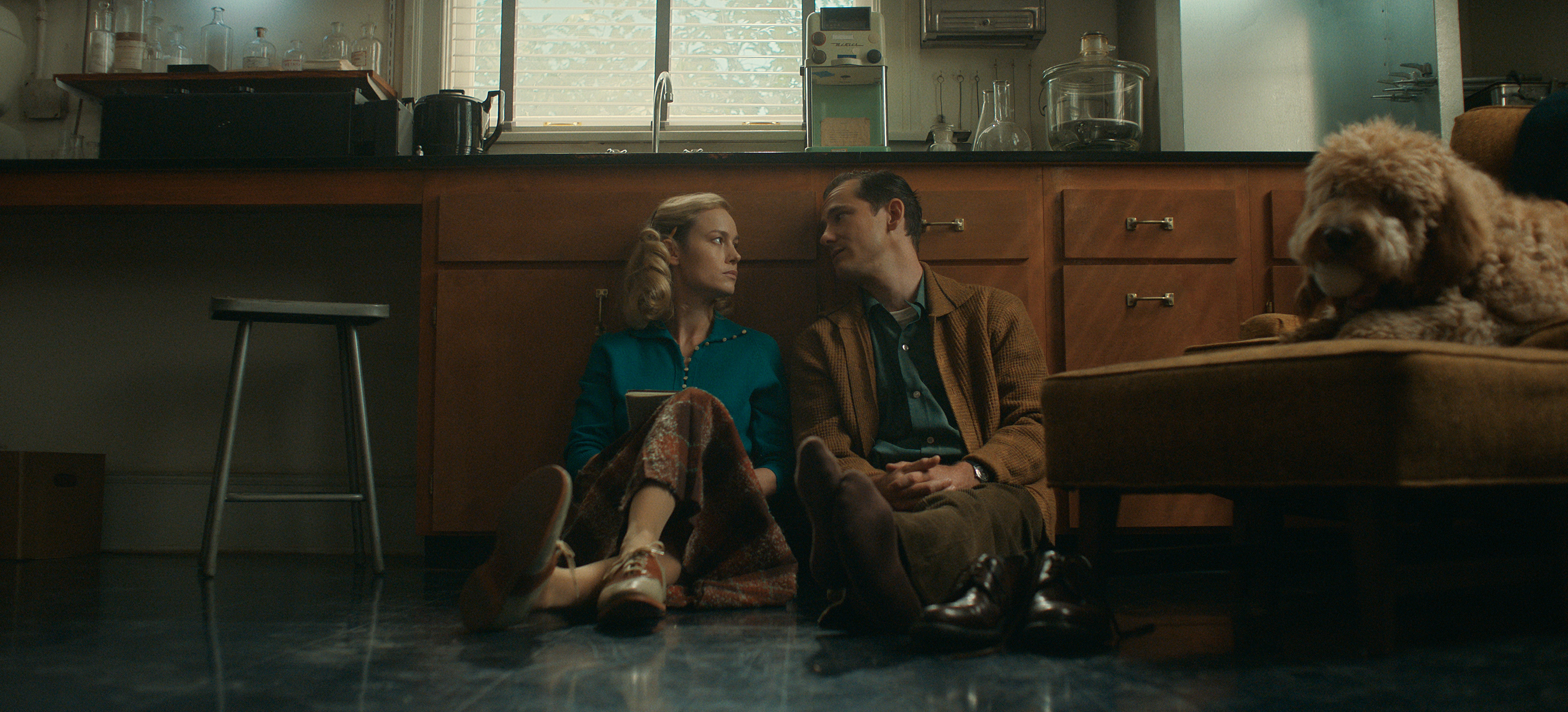
Lee Eisenberg: I felt the same way. What we were trying to build in the writer’s room is these two very unlikely people coming together in a short order. I mean, it’s Calvin and Elizabeth’s relationship, although episode seven, you, you come back to it, it spans months, you know what I mean? Like it’s not a, you know, it’s, it’s, it’s kind of this beautiful, this beautiful romance, but on screen, it’s, it’s less than two hours because she doesn’t meet him immediately.
And they, they certainly, you know, they’re kind of oil and vinegar or sorry, oil and water to start. And they, you know, by the time they get together, I mean, you know, it’s probably, it’s probably an hour, hour and a half that you’re actually able to sit with this thing that’s so, when they’re, when they, when they do kind of fall in love, it’s so beautiful. And we, you know, they’re, they’re rowing together and he prepares this Christmas meal for them.
And, you know, you have all these moments that are so tender and beautiful and you really feel like you’re swept up in it. And then, and then it’s pulled away from you. And, and, and that was something I felt when I read the book and I, and I felt the same way as you did, which was, oh my God, well, where do you go from here? And the fact that it continued on and you see this woman that life, life goes on and life, life does not go the way that you, you know, according to plan.
And as a result of Calvin’s death, which is the great tragedy of Elizabeth’s life, undeniably, she finds this community. She finds this tribe. She connects with Harriet. She ends up working at supper at six. She makes all these friends. She finds people to finally lean on.
And, you know, the, the, the show begins with Elizabeth really having her guard up and having these walls up. And it’s through a relationship with Calvin. Calvin’s really the first person to kind of penetrate that and, and, and allow someone to, to kind of allow her to be vulnerable, allow her to, to find a connection with someone.
And then for that to be pulled away, where, where do you go from there? And that, and, and, you know, we talked a lot about loss and about personal loss in the writer’s room and how to honor that and, and, and how memory works with people that you’ve lost and how they stay with you. And, and when they, when they appear and when they don’t, and, you know, when you have these life moments and you can’t imagine not having them with this person and, and, and, and being honest with that, we didn’t, we never wanted it to feel manipulative or treacly. We wanted to really, we wanted to lean into what, what, what loss like that feels like.
AR: What were some of the biggest additions and omissions you had to make when adapting the book?
Lee Eisenberg: You know, we talked a lot about 6:30, the dog in the book, the dog, 6:30 has, is, is narrating. And it’s from his perspective much more. And part of that was logistical.
You just, you know, the show we would have had to have shot for probably, you know, 500 days in order to have pulled off what was, you know, what, what can be written in prose. And so we really wanted episode three, which is the, you know, it’s the kind of the aftermath of Calvin dying at the end of episode two. We really wanted that to be the tragedy, the loss episode and telling that from the perspective, the unlikely surprising perspective of the dog.
And how do you pull that off where you have a dog experiencing loss and, and, and making that feel emotional? So that was something, you know, that the book did that we, we kind of concentrated in one episode. And then, the two other big things that we did, we changed the character of Harriet entirely in the book. I think, you know, I talked to Bonnie and, you know, she, she said very specifically that she never, she never described characters using race.

But I think that from the perspective of fans, I think that Harriet was probably a white woman in her 50s who was in a loveless marriage, an abusive marriage and became kind of a babysitter and caretaker to Mad and became a friend of Elizabeth’s. And, you know, one of the themes of the show is being open to surprise and that life doesn’t go the way, you know, according to plan, the casting of Asia Naomi King was for a different role initially, who ultimately plays Harriet. And I just thought to myself, man, this actress is incredible.
And now she’s going to have to split screen time with somebody else, because we’re going to have to cast Harriet. And then I’m going to have to write lines for, I assume we’ll find a good Harriet, but that’s going to mean that there can be fewer lines available for Asia. And I was so kind of intrigued by the prospect of this relationship between a, in some ways, almost as, you know, a single mother for most of the show, up to a black woman who is, is contending with racism and her neighborhood being taken away from her alongside Elizabeth, who is dealing with sexism and, you know, an inability as a female scientist to kind of rise up in her field.
And that’s unlikely friendship forms between these two women. And that became something so compelling to me and really rooting it in this Sugar Hill neighborhood and kind of pulling from history to kind of create this dynamic between these two women was something I just started leaning into. And the more I did, it felt like the Harriet from the book would serve less of a purpose.
So ultimately, we decided to take her out. And I want to get into the, just the sexism in it. That’s one of the things.
AR: So my daughters were attracted originally when they saw Captain Marvel. Then they were given exposure to this world that they don’t know. And they were angry.
They couldn’t believe their ears with some of the sexist things asking, ‘Why would someone be that way?’ I’m happy that’s not their experience so far, but I wanted them to have that eye-opening moment. Because the patriarchy is still real and they need to be ready for that. And watching how Elizabeth reacts to it was a good lesson. I’m wondering what the reactions have been from viewers about that?
Lee Eisenberg: Everything your daughters felt that has generally been the reaction. I mean, things have, we’ve made great strides, but there is still income disparity between men and women at the workplace. The expectations of women to carry the load in terms of housework and, you know, household chores along with, you know, the balance of work. It’s, you know, a woman, a working mom and a working dad, they do not evenly distribute, the household chores are not evenly distributed among the two of them statistically.
And so, you know, we were talking about all that stuff and, you know, all of the directors of the city series are working mothers. And we talked about the balance of that, you know, and so many of the conversations I had with my wife who co-wrote two of the episodes with me. And so having, you know, it was very important.
The show is very, very strongly female led from Brie Larson at the top to, as I said, all the directors were women, all the major department heads were women. And we were having those conversations constantly about sexism, whether it’s overt or kind of more micro, you know, feeling like microaggressions. And we, you know, we didn’t want, the show is not meant to be a PSA in any way.
I think that you kind of lay these things out and having a character like Elizabeth who is challenging it and questioning it and is the smartest person in the room and isn’t able to rise to the level that she should. And some, you know, she’s assaulted. I mean, you know, there are these moments that are not kind of like, oh, the guys are, you know, boys will be boys.
It’s, she is faced with like unimaginable, you know, tragedy, you know, at several turns. And the fact that she is just, she’s indomitable, she’s resilient and that she just keeps moving forward, I think was something that was incredibly important for us as we, you know, as we continued on with the series.
AR: Brie essentially plays another superhero of sorts.
Lee Eisenberg: That’s exactly right.
AR: In doing so, I’m just wondering how she took it on and what it was like working with her when she was developing that role? Because there’s a lot here, it’s actually a physical role. It covers grief and then it has the chemistry and the cooking, which are not second nature to everyone. What was it like working with her on that?
Lee Eisenberg: You know, with all projects you, unless you’ve worked with someone for years, you’re going on faith. You know, Bria and I had one Zoom and we decided to commit, you know, the next year of our lives to one another in a sense.
And I didn’t know exactly what that was going to be. And I cannot think of a better collaborator, partner, steward of the show than she. You know, she was an executive producer of the show and was in every casting debate, was, you know, talking about the separate six, you know, color palette of the set.
She was in the pre-marketing meetings and, you know, we’re looking at the trailers together and she sat in the edit with me for weeks. And we, I remember we, I got to a place with the finale and I was like, Apple was happy. I was happy.
I was, you know, sharing with people. And Bria said, I think there’s still some more work to do. And I was like, really? And I wasn’t mad.
I was more kind of like, oh, I’ve spent so much time on it. I kind of patted myself on the back. And she came into the edit and we sat for the next five days.
And we just, it was our last opportunity to work on the show. And she just did not want to leave anything on the field. And we made, we improved the finale by, I don’t know, I’m not good at math, but maybe 10%, which is really, you know, that’s a serious letter grade improvement.
And it was just beautiful. And so the challenge, you know, on top of all that, she was acting in almost every single scene. There’s very little rest time for her.
We’re giving her, you know, pages of scientific jargon that we’re pulling from Google or that our science consultants are, you know, are, you know, sending our way. She had to look like almost a world-class chef. She had to know how to row.
I mean, it was very, and also the range of emotions we were kind of throwing at her. You know, she’s in this kind of beautiful love story that we were trying to make as sweeping and epic as we possibly could. Then that’s yanked away from her.
And we’re asking her to, you know, live in loss for an entire episode, acting opposite a dog, which is, it was quite a challenge. And, you know, and then she becomes a mother and she doesn’t know she wants to become a mother. And then she becomes this kind of surprise celebrity with, you know, kind of the growth of ‘Supper at Six.’
And so there was so much for her to kind of play. And I think at every turn, she really, she just embraced it. She embraced, you know, it was kind of controlled chaos, I would say, that we had.
And we were moving at a real clip and, you know, she just nailed it. I mean, she was a delight on a personal level. She is my friend and I would spend time with her outside of it.
And then as a coworker and a collaborator, it was just, I mean, I would watch the dailies every night and just like my jaw would be on the floor like what she was pulling off. I was so moved even before we had gotten into the edit. Yeah, she nails it.
AR: And you have to really break it down and look at it through how much the series changes from episode to episode and how much she takes on. The performance we see in the beginning is only a small fraction of it. Like you said, the motherhood, the romance, the grief, it’s quite impressive. I want to close out with a question about the theme song. I love it.
When was that selected? And, you know, were there any others in mind? Because it’s amazing.
Lee Eisenberg: We, Sarah Adina Smith, our director who did the first two episodes, she, you know, she did her director’s cut. And I remember watching it and it was so different from what I expected.
And I just like, I called her and I was like, Oh my God, this is incredible.’ And she, she and our editor and our music supervisor, they had kind of experimented with different things. And I think it was not, it was not at all what you’d expect.
And it kind of, it’s arresting. And it really, it just worked. And, you know, I, that’s what is so fun about my job and that I don’t think I would have come up with that.
I don’t know that I would have gone in that direction. And, you know, of course, looking back on it, I’m like, well, of course that’s, that’s what it had to have been. I mean, what else would we have possibly put there? But there was never, once it was in the cut, there was no experimentation.
It was just, it was that. And then we were, and we were off to the races. It was not, it was not questioned.
AR: It’s fantastic. I hear just a couple notes and I’m like right back in the series. Thank you so much for your time. Congratulations on your work and I look forward to seeing what you do next.
Lee Eisenberg: Thank you so much. This was great. I really, really enjoyed the questions.
Watch all of Lessons In Chemistry streaming exclusively on Apple TV+


Comments
Loading…