

 Maxance Vincent
Like Takashi Miike, Kiyoshi Kurosawa has amassed a significant filmography in Japan, with a body of work totaling over 70 features and shorts for cinema and television. While many of them have not been seen by the masses and aren’t available for viewing outside of Japan, Kurosawa has still been able to solidify his place within contemporary genre cinema as one of its foremost artists, particularly with his 1997 masterpiece, Cure, which is arguably his most well-known film.
Kurosawa has worked in many genres throughout his career, but his latest motion picture, Cloud (Kuraudo), feels like a distillation of what he has done for the past forty or so years, combining his controlled aesthetic with a mastery of tonal balance that, on paper, shouldn’t work. Or at least, in the hands of a lesser filmmaker, wanting the audience to embark on such a significant proposition with one massive shift after the next could completely fall apart if you don’t know how to move your movie within each different tonality.
Thankfully, Kurosawa isn’t a lesser artist and reminds us exactly why he effectively petrified us with films such as Cure, Pulse, and Creepy. There’s already a sense of foreboding as we get introduced to our protagonist, Ryosuke Yoshii (Masaki Suda), an internet reseller who has recently quit his job at a factory after one of the objects he has resold has turned a substantial profit. He has ambitious plans to expand his business, and convinces his girlfriend, Akiko (Kotone Furukawa), to move in with him in a Tokyo suburb where his new home will also act as his main office for his business.
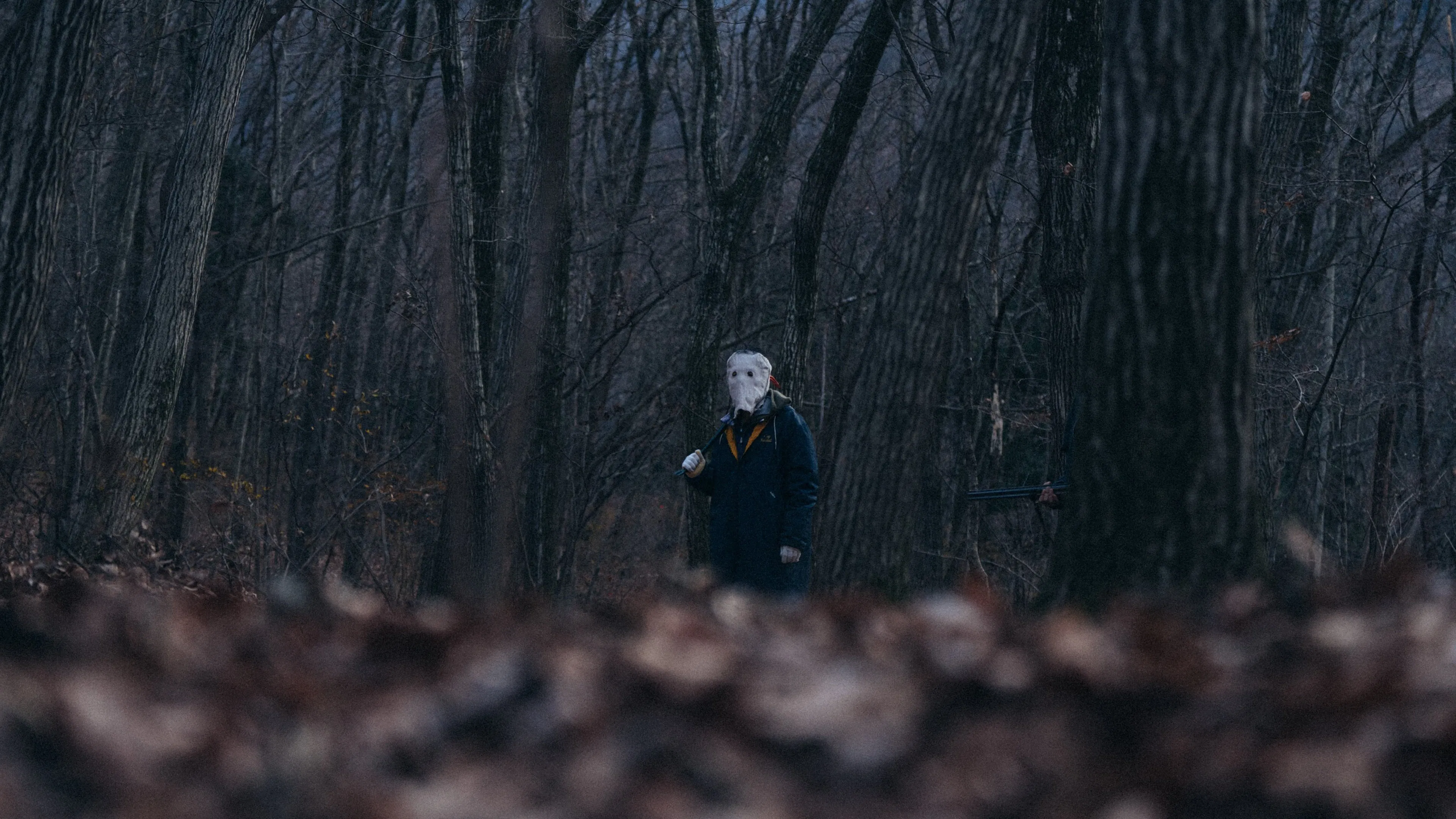
As he now devotes his entire time to reselling, he hires an assistant, Sano (Daiken Okudaira), to help him in his day-to-day tasks. While these elements are presented matter-of-factly, meaning that Kurosawa patiently ramps up the tension as we see Ryosuke making more irrational decisions online, we still feel a bit uneasy, and we don’t know why. It could be how Kurosawa and his cinematographer Yasuyuki Sasaki purposefully omit parts of the frame to establish dread, not only through its blocking, but also through how the unique 1.67:1 aspect ratio adds some tangible claustrophobia to how close we all are to the protagonist. On the other hand, it could be in how we quickly realize that Ryosuke’s reselling business is illegitimate, and he has been ripping off potential customers so he can get all the money, while his victims get nothing in return.
This is where the movie shifts atmosphere and begins to rattle its audience in a specific moment where Ryosuke, on a bus with Akiko, is stalked by an unseen individual who sits behind him. We know something is up as the ambient sounds abruptly shut off, and we’re left observing the protagonist looking at someone he doesn’t know, while that person knows him very well. The camera erratically pans to focus on Ryosuke, almost not knowing where to place it, as a clearer-than-clear signal to the audience that something is up. However, by the time it is perfectly positioned, the stalker has already made his presence known. Kurosawa doesn’t need to rely on grandiloquent jump scares to make an audience profoundly disturbed by what they’re seeing. It’s minimal (but immediate) shifts in tone that immediately grab us and put the audience on the edge of their seats, never knowing what’s about to happen next.
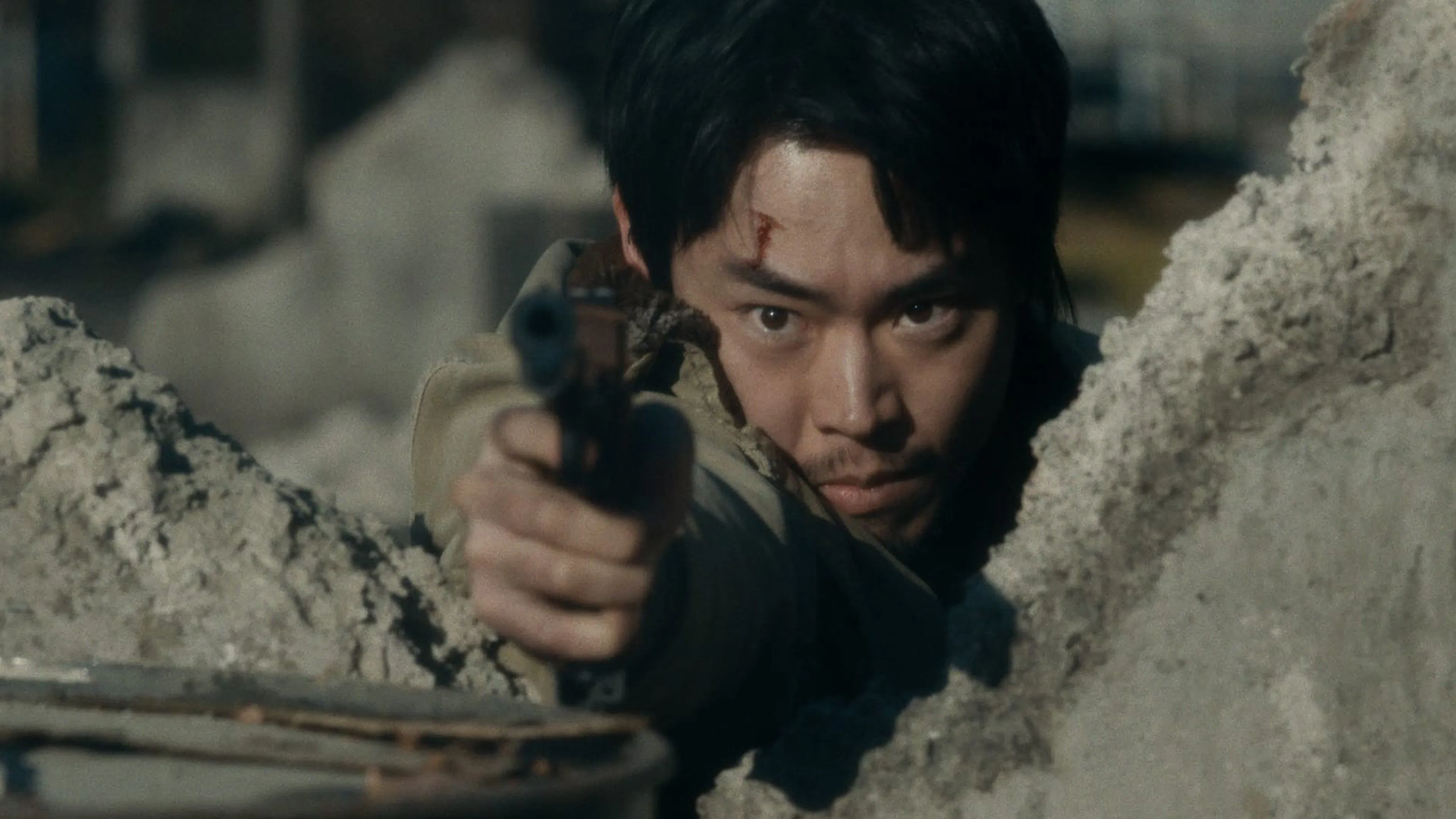
In the second hour of the movie, Kurosawa turns the meticulous slow-burn of Cloud into a full-on action thriller, with bouts of physical (and verbal) comedy interspersed into the mix. Without giving anything away (as it is a film you must see without having read much beforehand), it’s genuinely incredible to observe how Kurosawa can swiftly move from one register to the next, in a way that makes perfect logical sense for how the story progresses. For instance, the violence at first is brutal to watch and immediately shocks us as the filmmaker cuts from Ryosuke ripping someone off (through the artifice of a computer screen) to the fallout of that person being ripped off.
But as the plot progresses and the movie essentially becomes a game of cat-and-mouse between Ryosuke and numerous assailants who want to exact their revenge on the reseller for having lost their money, Kurosawa gets more playful and formally inventive. Kills of a gruesome intensity often turn into unintentional slapstick, from how one actor interacts in the environment to how even an antagonist can be killed. It’s not theoretically supposed to be played for laughs, but Kurosawa’s (purposefully) clumsy aesthetic seemingly frames it as such, and the only visceral reaction out of such a moment is laughter.
That said, when we eventually reach to the denouement of Cloud’s bloodletting, Kurosawa reminds us that none of this should be played for laughs, as preposterous as the situation may get. A midpoint climax twist repurposes some of the antagonist’s motivations into a far more sinister direction than it already was, leading to a conclusion that rattles more than it simply “shocks.” But that’s Kurosawa at full display, something we’ve not seen from the filmmaker since Creepy (others will argue that his previous work, Chime, is the best film he’s done in years, though I refuse to spend any money on NFTs, which is the only way you can legally watch it).
It may not be the best movie he’s ever made, but Cloud reaffirms Kurosawa’s status as one of Japan’s most essential filmmakers, one who consistently reinvents himself at every turn and ensure that, no matter the thrills and laughs his film produces, we will be unable to shake it off by the time the film’s final image burns our retina forever…
SCORE: ★★★1/2


Comments
Loading…